
Top 10 Solar Power Solutions for Global Buyers
Global buyers are no longer choosing solar panels alone. They are comparing rooftop kits, utility-scale arrays, hybrid inverters, batteries, and complete off-grid systems. Each option must work with local sunlight, grid conditions, installation skills, and maintenance access. One package rarely fits every market. Fit still matters.
The International Energy Agency’s Renewables 2024 report projects almost 5,500 gigawatts of renewable capacity growth worldwide between 2024 and 2030, with solar PV expected to provide nearly 80% of that increase. IRENA’s Renewable Power Generation Costs in 2023 report found that the global weighted average cost of electricity from newly commissioned utility-scale solar PV fell 12% that year, to about $0.044 per kilowatt-hour. These figures show momentum, not a guarantee of savings for every buyer. Financing, shipping, tariffs, and site preparation can change the final cost.
This guide to the Top 10 Solar Power Solutions for Global Buyers compares technologies through practical considerations: output, storage, expandability, support, and total ownership costs. It also uses Power Solutions Solar as a search phrase, not a promise that one supplier or design suits all. A fair comparison needs clear assumptions. Even product rankings have limits; climate, reliability needs, and installer quality can outweigh a small difference in panel efficiency. The best choice is the one that performs reliably on the buyer’s actual site, not just on a specification sheet.
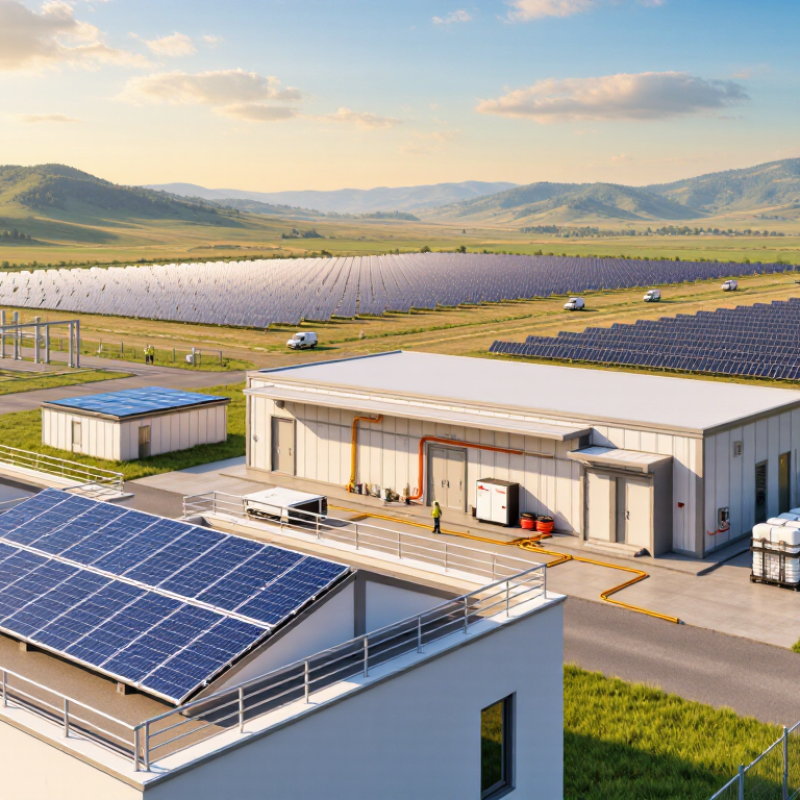
Solar Power Solutions and Their Core Technologies
Top 10 Solar Power Solutions for Global Buyers
Solar Power Solutions and Their Core Technologies
Solar power systems begin with photovoltaic modules, which convert sunlight into direct current. Cell materials and panel designs affect output, temperature performance, and long-term degradation. An inverter converts that electricity into alternating current for buildings or equipment. That conversion matters. Buyers should compare efficiency under realistic operating conditions, not just ideal laboratory ratings.
Battery storage can shift surplus daytime energy into evening use. Lithium-based batteries are compact, while other chemistries may suit different budgets, temperatures, or cycling needs. A trade-off remains. Battery capacity, inverter limits, and expected loads must be matched; otherwise, a large battery may sit underused. Hybrid inverters combine solar, storage, and grid connections, but system controls vary.
For remote sites, microgrids pair panels, storage, and backup generation with control software. Monitoring tools reveal daily production and can flag drops caused by dust, shading, or loose connections. On coastal roofs, salt and humidity deserve attention; in hot regions, ventilation and component temperature ratings matter. Small details count. Global buyers should also check service access, spare-part availability, and local installation expertise. A spreadsheet cannot capture every roof constraint. Site surveys and measured load data remain essential, even when early estimates look convincing.
Top 10 Solar Power Solutions for Global Buyers — Solar Power Solutions and Their Core Technologies
| Solar Solution | Typical Deployment | Core Technologies | Grid and Storage Configuration | Best Suited For | Key Buyer Considerations |
|---|---|---|---|---|---|
| Utility-Scale Fixed-Tilt PV | Ground-mounted solar farms, from multi-megawatt projects to installations exceeding 100 MW. | Crystalline-silicon PV modules, fixed mounting structures, string or central inverters, and plant monitoring systems. | Usually grid-connected; battery storage can be added as a separate or integrated system. | Large, relatively flat sites with strong solar resources and access to transmission or distribution networks. | Assess land rights, grid-connection capacity, permitting, local weather loads, soiling, and module cleaning requirements. |
| Single-Axis Tracker PV | Ground-mounted utility-scale projects, commonly developed on open sites with suitable terrain. | PV modules mounted on motorized structures that rotate during the day to follow the sun, supported by inverters and tracking controls. | Generally grid-connected; storage may be incorporated to shift some generation to later hours. | Sites where additional energy yield can justify tracker equipment and maintenance. | Compare expected yield with fixed-tilt designs; consider wind exposure, terrain, row spacing, tracker maintenance, and local supply-chain support. |
| Commercial and Industrial Rooftop PV | Rooftops, parking canopies, or other areas at factories, warehouses, offices, and retail facilities. | PV modules, rooftop or canopy mounting, inverters, protection equipment, and building energy monitoring. | Often connected behind the customer’s meter; batteries and backup circuits are optional and depend on site requirements. | Businesses with usable roof or canopy space and substantial daytime electricity consumption. | Check roof condition and remaining service life, structural capacity, fire and electrical codes, shading, and the local rules for exporting surplus power. |
| Residential Rooftop PV | Homes with suitable roof space, or ground-mounted arrays on residential properties. | PV modules, module-level or string power electronics, mounting hardware, electrical protection, and a household monitoring system. | Commonly grid-connected; a battery may provide backup or increase self-consumption where permitted and technically suitable. | Households seeking to generate electricity on-site and reduce grid purchases. | Review roof orientation, shading, household load patterns, local interconnection rules, warranties, and whether backup power is actually required. |
| Standalone Off-Grid PV | Remote homes, rural facilities, telecom sites, and other locations without dependable grid access. | PV modules, charge controller, battery bank, inverter where AC loads are used, and a system designed around the site’s load profile. | Operates independently of the utility grid; batteries are typically needed to supply loads when solar generation is insufficient. | Remote locations where extending or relying on the grid is impractical. | Size the system using seasonal solar data and actual loads; plan for battery replacement, backup generation if needed, and access to maintenance. |
| Grid-Connected PV with Battery Storage | Homes, businesses, community facilities, and larger solar plants that pair PV generation with batteries. | PV modules, battery cells and battery-management systems, bidirectional power conversion, controls, and safety systems. | Can store surplus solar energy for later use; backup operation requires compatible equipment and suitable system design. | Sites seeking greater solar self-consumption, peak-load management, or resilience during certain grid interruptions. | Evaluate usable battery capacity, power rating, round-trip efficiency, operating temperature, cycle-life assumptions, safety standards, and replacement costs. |
| Floating PV | Reservoirs, water-treatment ponds, and other suitable inland water bodies. | PV modules on floating support structures, mooring and anchoring systems, electrical equipment designed for the environment, and monitoring systems. | Typically connected to a nearby grid connection; storage can be added where required. | Locations where land is constrained and the water body is suitable for installation. | Study water-level variation, wind and wave conditions, anchoring, corrosion, water-use rules, ecological impacts, and safe maintenance access. |
| Agrivoltaics | Solar arrays installed on agricultural land while farming, grazing, or other compatible agricultural activity continues. | PV modules on elevated or spaced structures, agricultural-compatible access and layouts, inverters, and site monitoring. | Usually grid-connected; battery storage is optional and depends on project economics and local needs. | Farms and rural sites where energy generation can be designed alongside ongoing agricultural use. | Coordinate array height, spacing, shading, machinery access, crop or grazing needs, land-use permissions, and agreements with land users. |
| Concentrated Solar Power (CSP) | Large, direct-sunlight-rich sites, particularly in arid regions, for utility-scale electricity generation. | Mirrors concentrate sunlight onto a receiver; a heat-transfer system supplies a thermal power cycle, often with thermal energy storage. | Typically supplies a grid; thermal storage can allow electricity generation to continue after direct sunlight decreases. | Large projects with strong direct normal irradiance and access to suitable infrastructure. | Assess direct-sunlight resource, water needs, site conditions, project scale, permitting, and the cost and operating complexity of thermal systems. |
| Solar Water-Pumping Systems | Wells, farms, livestock watering points, and community water systems, especially in remote areas. | PV modules, a DC or AC pump, pump controller, water-level protection, and a water-storage tank or reservoir where appropriate. | Can operate without a grid; storing water can reduce or avoid the need for electrical battery storage in many applications. | Sites with a reliable water source, a defined pumping requirement, and adequate solar exposure. | Confirm seasonal water availability, required flow and lift, pump compatibility, dry-run protection, water storage, and maintenance access. |
Solution scale and performance vary with site conditions, system design, local regulations, and project requirements. The configurations shown are typical examples, not guaranteed specifications.
Related Posts
-
Understanding the Specifications of the Best Industrial Solar Lights and How to Choose the Right One
-
How to Choose Industrial Solar Panels for Your Business?
-
Why Choose Industrial Solar Energy for Your Business?
-

Navigating Global Standards for Power Solar Panels in Export and Import Markets
-

Advantages of Utilizing Solar Energy Solutions for Sustainable Procurement
-
Exploring Innovative Solutions: How Pv Panels Transform Energy Efficiency Worldwide