Why Choose Industrial Solar Energy for Your Business?
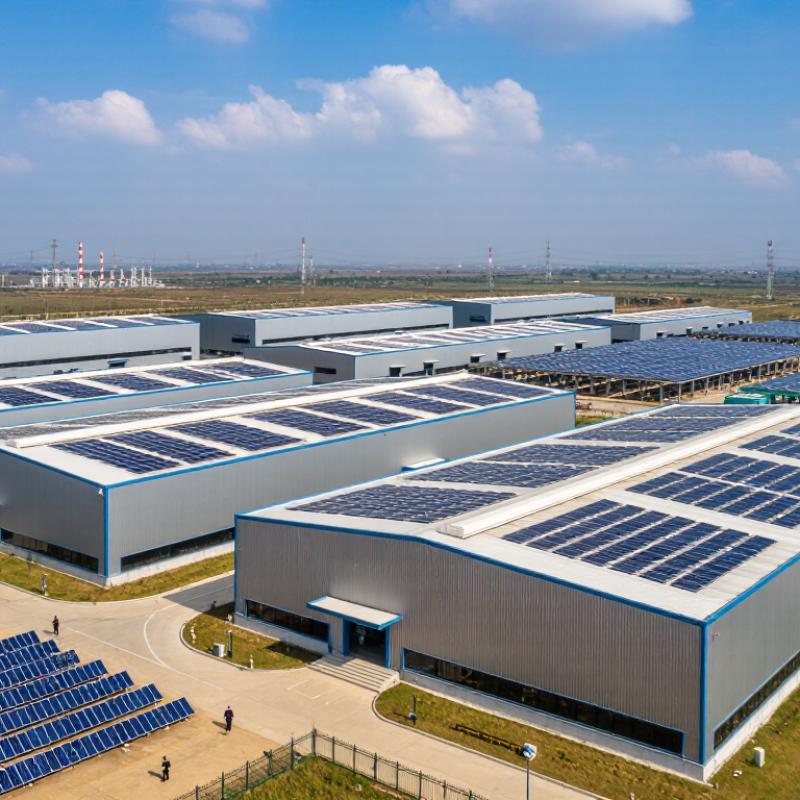
Industrial Solar is becoming a practical energy strategy for manufacturers, warehouses, and processing facilities. Electricity often represents a major operating cost, especially when production runs during daylight hours. On-site photovoltaic systems can convert unused roof space, parking areas, or nearby land into a predictable power resource. The effect is tangible: panels above a factory roof can reduce grid purchases while machinery continues running below.
The market evidence is strong. The International Energy Agency reported nearly 400 gigawatts of solar photovoltaic capacity additions worldwide in 2023, making solar the largest source of new renewable capacity. IRENA’s Renewable Power Generation Costs in 2023 report found that utility-scale solar photovoltaic electricity reached an average cost of approximately USD 0.044 per kilowatt-hour. Costs are becoming more competitive. That does not make every project financially attractive.
A reliable decision requires more than a panel quotation. Experienced developers examine interval electricity data, demand charges, roof loading, shading, transformer capacity, and production schedules. They also assess battery storage, backup requirements, maintenance access, and future expansion plans. A shaded roof can disappoint. An unsuitable roof can create avoidable engineering costs.
Industrial Solar can also support emissions reporting and long-term energy planning. The U.S. Department of Energy notes that commercial and industrial buildings remain important opportunities for distributed solar deployment. However, savings depend on local tariffs, financing, weather, and system performance. Businesses should compare several scenarios, including a conservative one. A careful feasibility study may reveal that a smaller system performs better than a larger installation. That restraint is part of professional judgment.
Industrial Solar Energy Explained: PV Costs Fell 89% Since 2010 (IRENA)
Why Choose Industrial Solar Energy for Your Business?
Industrial solar energy has changed from a costly experiment into a practical investment. According to the International Renewable Energy Agency, solar photovoltaic costs fell 89% between 2010 and recent reporting periods. That decline reflects cheaper modules, improved manufacturing, and better installation methods. It also makes on-site generation more accessible for factories, warehouses, and processing facilities.
The savings are not automatic. A serious assessment reviews electricity demand, roof strength, available land, local sunlight, and transformer capacity. A factory using power during daylight may offset more grid electricity than a facility operating mostly at night. Battery storage can help, but it adds cost and maintenance needs. Dust, heat, and shading also affect real production. Small details matter.
Look beyond the headline figure. PV prices can fall while labor, permitting, financing, and grid upgrades remain expensive. A reliable business case should compare several years of utility bills with projected output and maintenance. It should also test weaker assumptions, such as lower sunlight or delayed construction. The 89% decline is encouraging, but it is not a guarantee. Careful planning is still essential.
How Solar Cuts Operating Costs: 96% of New Renewables Beat Fossil Power (IRENA)
Industrial solar energy can turn a factory roof, warehouse, or unused parking area into a long-term cost-control asset. The 96% figure in the subtitle needs careful reading, because results vary by year and project type. IRENA’s Renewable Power Generation Costs report confirms that most newly commissioned renewable projects now generate electricity below the cost of new fossil-fuel plants. Solar’s falling equipment prices make this advantage especially relevant for businesses with predictable daytime demand.
The financial impact appears on ordinary operating bills. A facility using solar power at noon may reduce purchases during expensive daytime hours. Its meters can show lower grid consumption before the afternoon shift ends. The U.S. Energy Information Administration reports that solar photovoltaic costs have declined sharply over the past decade, improving project affordability. Lazard’s Levelized Cost of Energy analysis also places utility-scale solar among the lowest-cost new generation options in many markets.
Solar does not remove every expense. Batteries, grid upgrades, maintenance, insurance, and permitting can change the final return. Cloudy weeks still matter. A poorly designed system may produce less value than promised, especially when electricity demand peaks after sunset. Businesses should compare interval utility data, roof conditions, financing costs, and local tariffs before investing. IRENA and the International Energy Agency both stress that system integration and storage will become more important as renewable penetration increases. That detail is easy to overlook.
System Performance: PV Modules Degrade by About 0.5% Annually (NREL)
Industrial solar energy becomes more credible when performance assumptions remain realistic. NREL’s 2016 review found a median photovoltaic degradation rate of approximately 0.5% annually. At that rate, a module may retain about 88% of its original output after 25 years. This decline is gradual, not sudden.
For an industrial roof, that difference affects production forecasts, maintenance planning, and electricity savings. A 1-megawatt system producing 1,300 megawatt-hours in its first year could lose roughly 6.5 megawatt-hours during the following year from degradation alone.
NREL also notes that degradation varies by technology, climate, and operating conditions. Heat, humidity, snow, dust, and repeated thermal cycling can change the result.
The estimate is not a promise. Real sites are messier. IEA PVPS Task 13 reports that soiling, shading, inverter failures, and downtime can create losses beyond module degradation.
A dusty factory roof may require scheduled cleaning after nearby construction. Poor drainage can leave water stains and accelerate inspection needs.
These details should enter the financial model, not remain in a sales brochure. Monitoring monthly output against weather-adjusted expectations gives operators useful evidence.
It may also expose an uncomfortable problem: the modules are healthy, but maintenance practices are not. Designing with conservative degradation assumptions can make industrial solar planning more dependable.
Business Resilience: Solar and Storage Reduce Grid-Dependence Risks
Industrial solar energy can make a business less vulnerable to grid interruptions. Panels generate power on-site, while battery storage supports critical equipment when utility service fails. A warehouse may keep refrigeration, security systems, and network equipment running during a short outage. A factory can protect selected production controls instead of shutting down completely.
Resilience depends on careful system design, not panels alone. Energy specialists should review load profiles, outage history, roof conditions, and local electrical requirements. Batteries can discharge during peak demand and recharge when solar output is strong. During an evening outage, stored energy may power emergency lighting, servers, or essential pumps. Keep critical loads separate.
The battery must be sized for real operating conditions. A poorly sized system can disappoint. Cloudy weather, seasonal production changes, and battery aging reduce available capacity. Regular inspections, tested backup controls, and clear employee procedures improve reliability. Businesses should also confirm how long storage can support each essential load. Solar is not a perfect shield. However, combining generation, storage, maintenance, and realistic planning can reduce grid-dependence risks and give operations more time to respond.
Implementation Steps: Assess Demand, Roof Space, Grid Rules, and ROI
Choosing industrial solar energy starts with demand, not panel count. Review twelve months of electricity bills and production records. An hourly load profile shows when power is consumed. Compare daytime demand with evening and weekend usage. A factory running presses at noon may use most solar power directly. A warehouse with low daytime demand may need storage or controlled export. Measure peak demand carefully. Small billing details can change system sizing.
Roof space needs a practical inspection. Check structural capacity, roof age, drainage, access paths, and shaded areas. A clear roof does not always mean usable space. Vents, skylights, and fire access routes reduce the installation area. Leave room for maintenance. Otherwise, a cheaper layout may create expensive problems later. A structural engineer should verify load limits before detailed design.
Grid rules can determine whether surplus electricity is exported, limited, or curtailed. Confirm application steps, protection requirements, metering standards, and local interconnection capacity. Rules vary by location and utility. Treat verbal estimates cautiously. For ROI, model energy prices, demand charges, installation costs, maintenance, financing, panel degradation, and replacement risks. Use conservative production estimates and test several tariff scenarios. A neat spreadsheet can still be wrong. I would question any payback forecast that ignores cloudy months, production downtime, or roof repairs. Compare annual savings with the project’s full lifecycle cost, not only its purchase price.