
2026 Top Power Solar Products for Global Buyers?
Choosing the right Power Solar products in 2026 requires more than comparing panel wattage or glossy efficiency claims. Global buyers must examine performance, durability, certification, warranty terms, and after-sales support. A 600-watt module may look impressive. Yet, its real value depends on heat tolerance, shading behavior, installation quality, and local grid conditions.
Fatih Birol, Executive Director of the International Energy Agency, described solar photovoltaics as “the new king of electricity markets.” That observation matters for buyers planning residential, commercial, agricultural, or remote energy systems. This guide reviews leading 2026 product categories, including high-efficiency solar panels, hybrid inverters, lithium battery storage, portable solar generators, and smart energy management systems. Each category serves a different need. Rooftop users may prioritize compact designs and low-light output. Industrial buyers may need stable voltage, liquid cooling, and predictable maintenance costs.
Reliable purchasing also requires practical verification. Check independent test reports, temperature coefficients, degradation rates, IP ratings, and installer compatibility. Ask whether replacement parts are available in your region. A strong warranty means little without responsive service. No ranking can fit every rooftop. Product prices, shipping risks, and certification requirements also change across markets.
Some recommendations may remain imperfect. Laboratory results do not always match dusty fields, humid coastlines, or crowded urban roofs. Buyers should compare real operating data before committing capital. The best Power Solar product is not always the most powerful one. It is the system that performs safely, consistently, and economically for its intended location.
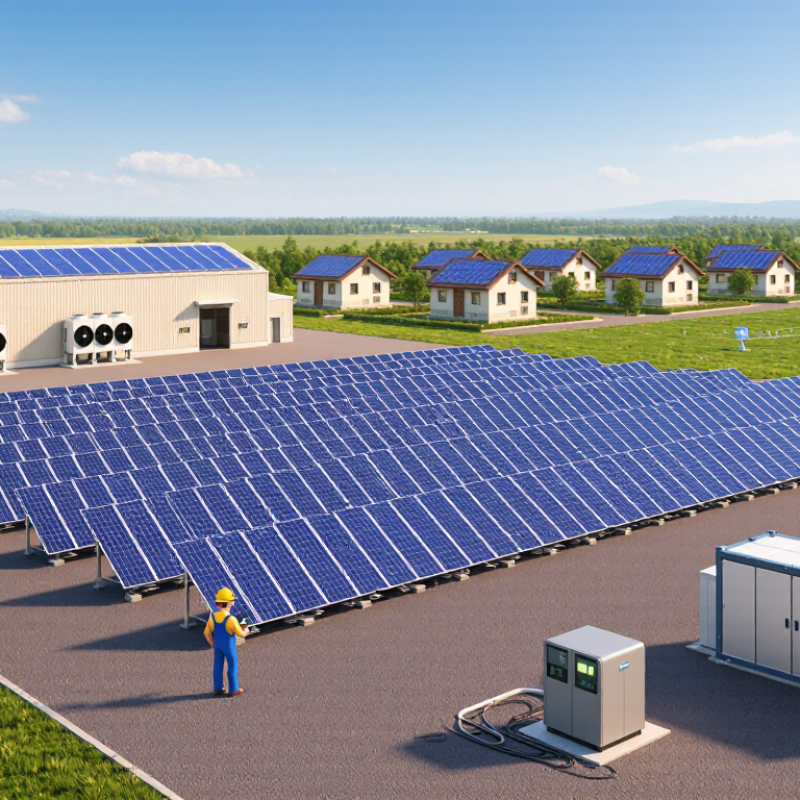
Solar Power Product Categories and Their Core Functions in 2026
2026 Top Power Solar Products for Global Buyers?
In 2026, global solar buyers are comparing complete power systems, not isolated panels. Solar photovoltaic modules convert sunlight into direct current electricity. Higher output matters, but temperature performance and warranty evidence matter too. For rooftops, mounting structures must match wind, snow, and corrosion conditions. Small errors can create costly maintenance.
Inverters form the system’s control center. They convert direct current into usable alternating current and manage grid interaction. Hybrid models can direct surplus energy toward batteries, household loads, or backup circuits.
Battery storage supplies power after sunset and during short outages. Buyers should check usable capacity, cycle life, thermal protection, and replacement procedures. A large battery is not always the best choice. Poor sizing increases cost and may leave capacity unused.
Charge controllers remain important in off-grid systems, especially with smaller arrays. They regulate charging and protect batteries from overvoltage and deep discharge. Portable solar generators combine panels, batteries, inverters, and monitoring in one movable unit. Energy meters and digital dashboards show production, consumption, faults, and battery status.
Reliable purchasing requires test reports, clear installation manuals, local service access, and compatible spare parts. Specifications can look impressive. Field conditions often disagree. Buyers should verify performance under their own temperature, sunlight, and grid conditions.
Key Technologies Shaping High-Performance Solar Products
2026 Top Power Solar Products for Global Buyers?
Key Technologies Shaping High-Performance Solar Products
By 2026, high-performance solar products will be judged beyond nameplate wattage. Real output depends on heat, dust, shading, and maintenance access. Modern n-type cells, including TOPCon and heterojunction designs, reduce performance losses in demanding climates. Better contacts can also support higher bifacial gains when rear-side light is available. Those gains need measured evidence, not attractive brochures.
Power electronics are changing too. Module-level monitoring can reveal underperformance before a service visit becomes urgent. Smart inverters manage voltage, grid support, and battery coordination with faster controls. At the site, thermal imaging and IV testing can expose hidden defects. Small faults become expensive when ignored. Independent testing under relevant IEC standards improves purchasing confidence.
Durability remains the less glamorous technology. Glass thickness, encapsulant quality, junction-box design, and corrosion resistance influence lifetime value. Buyers should compare degradation guarantees with independent test results and local climate data. Salt mist near coastlines and abrasive dust inland demand different verification plans. Perovskite tandem modules offer exciting efficiency potential, but long-term field evidence is still developing. That uncertainty matters. High efficiency is not automatically high performance. Some projects may gain more from robust service access than another efficiency point. Even careful forecasts can miss unusual weather. Honest review improves the next decision.
2026 Top Power Solar Products for Global Buyers? - Key Technologies Shaping High-Performance Solar Products
| Solar Product / Technology | Typical Commercial Specification | Key Performance Metric | Typical Range or Rating | Main Buyer Benefit | Best-Fit Applications |
|---|---|---|---|---|---|
| N-Type TOPCon PV Modules | Monocrystalline silicon; bifacial glass-glass or glass-backsheet construction | Module efficiency; bifaciality; temperature coefficient | Approximately 22%–24% efficiency; bifaciality commonly 75%–85%; temperature coefficient about −0.29% to −0.32%/°C | Higher energy yield and lower temperature-related losses than many conventional p-type designs | Utility-scale, commercial rooftops, high-temperature regions, and projects requiring strong lifetime output |
| Back-Contact PV Modules | Interdigitated back-contact silicon cells with no front-side metal grid | Module power density; low-light response; visual cell-area utilization | Approximately 22%–24% module efficiency in premium commercial designs; temperature coefficient often near −0.29%/°C | High power output from limited roof area and improved appearance for premium installations | Residential and commercial roofs where available area is constrained |
| Bifacial PV Modules | Two-sided energy collection using a reflective rear environment | Bifacial gain; rear irradiance; ground albedo | Common project-level bifacial gain is approximately 5%–15%, depending on design, spacing, surface reflectivity, and shading | Additional energy without a proportional increase in module footprint | Open-field solar farms, elevated systems, carports, and high-albedo sites |
| High-Power Utility PV Modules | Large-format silicon modules with approximately 182–210 mm cell formats | Rated power; current and voltage compatibility; mechanical load rating | Common rated output approximately 550–720 W; maximum system voltage generally 1,500 V DC for utility projects | Lower module count, reduced balance-of-system labor, and higher array power density | Utility-scale projects and large industrial installations |
| Single-Axis Solar Trackers | Horizontal tracking system that follows the sun from east to west | Annual energy gain versus fixed tilt; wind-stow capability | Typical annual energy gain approximately 15%–25%, strongly dependent on latitude, weather, row spacing, and site design | Higher generation from the same land area when additional mechanical complexity is acceptable | Large, relatively flat utility-scale solar plants |
| String Inverters | Distributed DC-to-AC conversion using multiple smaller inverter units | Peak efficiency; MPPT voltage range; overload capability | Peak efficiency commonly approximately 97.5%–99%; many units support 1,000 V or 1,500 V DC architectures | Flexible system design, improved monitoring granularity, and reduced impact from partial shading or mismatch | Residential, commercial, industrial, and distributed utility projects |
| Central Inverters | High-capacity centralized DC-to-AC conversion equipment | Conversion efficiency; grid-support functions; serviceability | Peak efficiency commonly approximately 98.5%–99%; commonly deployed with 1,500 V DC utility arrays | Lower equipment count and efficient operation for large, uniform solar fields | Large utility-scale and centralized commercial projects |
| Lithium-Iron-Phosphate Battery Storage | Stationary battery energy-storage system using LFP electrochemistry | Round-trip efficiency; usable energy; cycle life; depth of discharge | Round-trip efficiency commonly approximately 85%–95%; typical warranted service life often 10–20 years; cycle life frequently specified above 4,000 cycles, depending on operating conditions | Time shifting, backup power, peak-demand reduction, and renewable-energy integration | Homes, commercial facilities, microgrids, and utility-scale storage plants |
| Hybrid Solar Inverters | Integrated PV inverter, battery charger, energy-management controller, and grid interface | PV-to-load efficiency; backup response time; battery compatibility | Typical conversion efficiency approximately 95%–99%; backup transfer may range from near-instantaneous operation to several seconds depending on architecture | Simplified system integration and coordinated control of solar generation, batteries, loads, and the grid | Residential backup, small commercial systems, and remote or weak-grid applications |
| Solar DC Optimizers and Module-Level Electronics | Power electronics installed at module or sub-array level for independent maximum-power tracking | Mismatch reduction; module-level monitoring; rapid shutdown compliance | Power-conversion efficiency commonly approximately 98%–99%; actual energy gain depends on shading, orientation, and module mismatch | Improved visibility, safer shutdown behavior, and better performance on complex roofs | Residential and commercial rooftops with multiple orientations or partial shading |
| Digital Solar Monitoring Platforms | Cloud or local software for production monitoring, alarms, asset management, and maintenance analysis | Data resolution; fault-detection coverage; availability reporting | Monitoring intervals commonly range from 1–15 minutes; performance is typically evaluated using specific yield, availability, and performance ratio | Earlier fault detection, more accurate maintenance planning, and better operational transparency | All system sizes, especially multi-site commercial and utility portfolios |
| Building-Integrated and Lightweight PV | Flexible, lightweight, or architecturally integrated photovoltaic surfaces | Weight per area; module efficiency; mounting compatibility | Lightweight products may be below approximately 10 kg/m², while efficiency varies widely by cell design and substrate | Enables solar deployment on roofs or structures with limited load-bearing capacity | Industrial roofs, façades, transport structures, temporary installations, and weight-sensitive buildings |
Data note: The figures shown are typical technical ranges for commercially available solar technologies and are intended for preliminary product comparison. Actual performance depends on cell design, climate, system configuration, installation quality, operating temperature, shading, degradation, and applicable certification requirements.
How to Compare Solar Panels, Inverters, Batteries, and Kits
2026 Top Power Solar Products for Global Buyers
How to Compare Solar Panels, Inverters, Batteries, and Kits
Comparing solar panels requires more than checking rated watts. Examine efficiency, temperature coefficient, degradation rate, dimensions, and performance at weak sunlight. A 450-watt panel may produce less energy than expected on a hot roof. Check current and voltage against the inverter’s operating range. Review independent test reports, certification records, and warranty terms. These documents matter more than polished product photos.
Inverters need careful matching. Compare continuous output, surge capacity, MPPT voltage range, conversion efficiency, protection rating, and monitoring functions. Confirm compatibility with local grid requirements before ordering. For batteries, measure usable capacity rather than advertised capacity. Check depth of discharge, cycle life, thermal controls, charging limits, and warranty conditions. Cold weather can reduce available energy. This is often overlooked.
Solar kits should include compatible panels, an inverter, batteries, cables, connectors, protection devices, and mounting hardware. Inspect cable sizes and connector quality. Ask whether replacement parts are available locally. Also compare shipping weight, installation guidance, technical support, and delivered cost. A cheap kit may exclude essential breakers or roof hardware. I have seen buyers focus on battery capacity and miss poor inverter matching. That mistake is expensive. Recheck every specification.
2026 Top Power Solar Products for Global Buyers
How to compare solar panels, inverters, batteries, and solar kits using typical efficiency benchmarks.
The figures show representative efficiency ranges commonly specified for current mainstream products. Actual performance varies with technology, operating temperature, system size, installation conditions, and load profile.
Regional Standards, Certifications, and Buyer Requirements
For global solar buyers, product selection now depends on regional compliance, not panel efficiency alone. IRENA’s Renewable Capacity Statistics 2024 reported 346 GW of new solar capacity added worldwide in 2023. This scale increases pressure on suppliers to prove safety, durability, and traceability. Buyers should request IEC 61215 test evidence for design qualification and IEC 61730 documentation for module safety. Certificates must match the exact model, factory, and revision.
Regional rules can change the purchasing decision. In Europe, buyers commonly expect CE documentation, grid-code compliance, and evidence supporting installation under local electrical rules. In the United States, equipment often requires recognized safety certification and alignment with NEC requirements. India may require applicable BIS registration, while Australia commonly emphasizes local grid connection rules and installation standards. These are not interchangeable. A document accepted in one market may be insufficient elsewhere.
Ask for more than a certificate. Request temperature-coefficient data, salt-mist testing, fire classification, warranty terms, and supply-chain records. The IEA’s Renewables 2024 report projected strong solar growth through 2030, but rapid deployment can expose weak documentation and inconsistent quality control. Procurement teams should also verify factory audit dates and independent test laboratories. A high-efficiency module looks attractive on paper. It may still fail a regional inspection. Product databases, certificates, and field references should agree; sometimes they do not. That gap deserves careful questioning.
Choosing the Right Solar Product for Different Global Applications
2026 Top Power Solar Products for Global Buyers?
Choosing the right solar product begins with the application, not the panel rating. IRENA’s Renewable Capacity Statistics 2025 reported 452 gigawatts of new solar capacity in 2024. This growth reflects different needs across markets. Location changes everything.
For urban rooftops, high-efficiency modules, compact inverters, and smart monitoring suit limited roof space. A factory may need larger systems, battery storage, and power controls for evening production. The IEA Renewables 2024 report expects solar PV to provide about 80% of global renewable capacity expansion through 2030. Buyers should therefore assess daily load curves, grid reliability, roof structure, and local weather before selecting equipment.
Remote clinics and telecom sites require durable off-grid systems, not simply the highest wattage. Choose batteries with suitable thermal protection, charge control, and accessible maintenance. Agricultural users may need raised solar structures, water-pumping systems, or dust-resistant enclosures. In coastal regions, corrosion protection matters as much as efficiency. Small is not simple.
Field experience also exposes an uncomfortable truth: published performance rarely matches every site. Heat, shading, dust, and poor installation can reduce output significantly. I still see procurement teams compare prices before checking service skills and spare-part access. That approach saves money on paper, then creates expensive downtime. The Global Solar Power Tracker and IEA PVPS reports also show rapid market growth, but buyers should verify testing records, warranties, installer qualifications, and recycling arrangements before signing contracts.
Related Posts
-
7 Strategies for Choosing the Best Energy Solutions Solar for Your Business
-

Top Solar Power Solutions for Global Buyers in 2026?
-
Understanding the Specifications of the Best Industrial Solar Lights and How to Choose the Right One
-

Exploring the Top Best Solar Lighting Outdoor Solutions for Global Buyers
-
Why Choose Solar Energy Solutions for Your Business?
-
Transform Your Outdoor Space with Innovative Solar Lighting Systems for Eco-Friendly Living