Why Choose Solar Powered Outdoor Lights for Your Business?
For many businesses, outdoor lighting is more than a design feature. It guides customers across parking areas, highlights entrances, and supports safer movement after sunset. Solar Powered Outdoor Lights offer a practical way to provide this illumination without extending underground electrical wiring. Each fixture uses a solar panel, rechargeable battery, LED lamp, and control system. During daylight, the panel collects energy. At night, the light operates automatically.
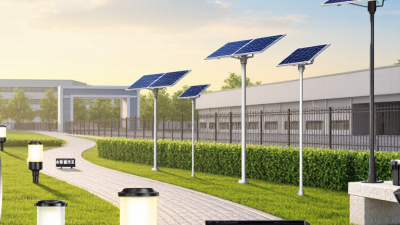
This option can suit gardens, pathways, signs, patios, warehouses, and remote business locations. A hotel manager might place warm lights beside a walkway, while a retailer may use brighter fixtures near delivery zones. Installation can be faster because trenching is often unnecessary. Energy consumption from the grid may also decrease. That sounds simple. It is not always simple.
Performance depends on sunlight, weather, shading, battery capacity, and local temperatures. A panel blocked by a building may charge poorly, even in a sunny region. Professional planning should examine winter daylight, pole spacing, lighting levels, drainage, and expected customer traffic. Reliable suppliers should provide clear specifications, warranty terms, photometric data, and battery replacement guidance. Businesses should also check applicable electrical, building, accessibility, and safety requirements before installation.
In practice, good results require more than buying attractive fixtures. Clean panels regularly. Inspect mounting hardware. Test performance during darker months. Some systems may underperform, and that possibility deserves honest attention. With suitable products, measured planning, and routine maintenance, Solar Powered Outdoor Lights can support dependable, lower-impact business lighting while improving the appearance of outdoor spaces.
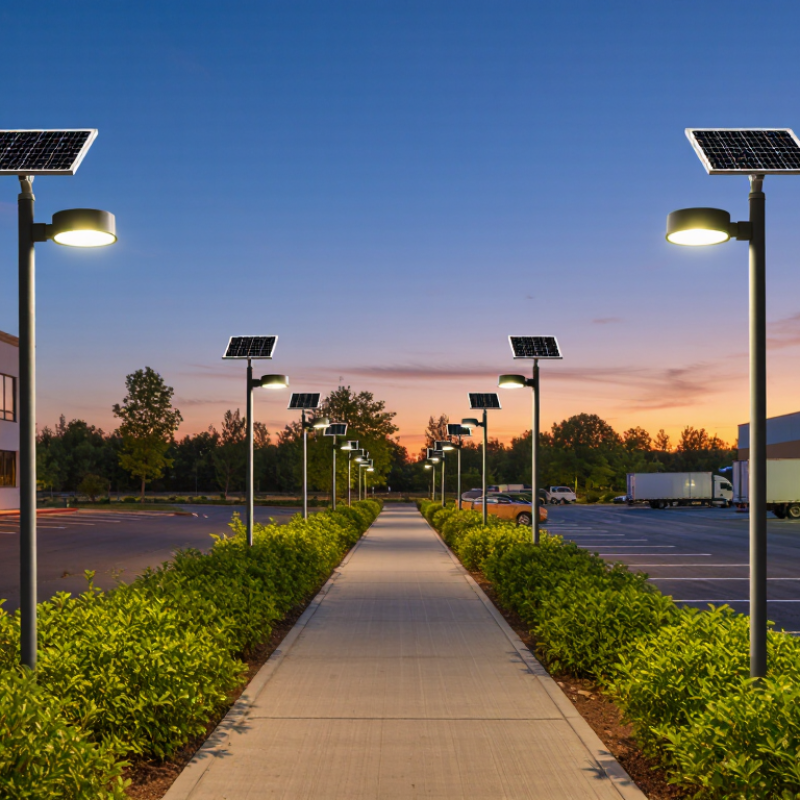
How Solar Outdoor Lights Work: PV Panels, Batteries, LEDs, and Sensors
Why Choose Solar Powered Outdoor Lights for Your Business?
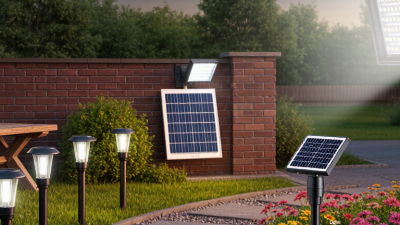
Solar outdoor lights convert sunlight into usable electricity through a compact photovoltaic panel. During daylight, the panel produces direct-current power. A charge controller manages this flow and protects the battery from overcharging. At night, the stored energy powers efficient LEDs with steady, focused illumination.
A light sensor can switch the fixture on at dusk and off at dawn. Some models also use motion sensors, increasing brightness when people or vehicles approach. This can reduce energy use in pathways, parking areas, entrances, and loading zones. The result depends on careful placement. Panels need clear exposure to sunlight, not shade from buildings, signs, or trees. Dust and snow can also reduce performance.
Real conditions are less perfect. Several cloudy days may shorten operating hours, especially with an undersized battery. Battery capacity, LED output, operating temperature, and expected winter sunlight should be checked together. A site assessment helps prevent costly assumptions. It should also consider drainage, wind exposure, mounting height, and local electrical requirements. Reliable specifications matter more than impressive brightness claims. Regular inspection is still useful, even without grid wiring. Clean panels, secure mounts, and timely battery replacement support consistent performance. Solar lighting is practical, but it is not maintenance-free.
Energy Efficiency: LEDs Use Up to 75% Less Energy Than Incandescent Lamps (DOE)
Why Choose Solar Powered Outdoor Lights for Your Business?
Energy efficiency is a practical reason to consider solar powered outdoor lighting. The U.S. Department of Energy reports that LEDs use up to 75% less energy than incandescent lamps. That difference can reduce electricity demand across entrances, walkways, parking areas, and signs. In a site assessment, I would compare lamp wattage, operating hours, and seasonal sunlight before estimating savings. A lower-wattage LED also produces less heat during long overnight operation.
The savings become clearer after sunset. A solar panel charges the battery during daylight, while the LED provides focused light after dark. Modern controls can dim fixtures when areas are empty and increase brightness when movement is detected. This approach avoids lighting unused spaces at full power. It also reduces wiring work in locations far from the main electrical system. However, performance depends on panel placement, battery capacity, weather, and maintenance.
Cloudy weeks can expose weak system design. That is worth admitting. A shaded panel or aging battery may shorten nighttime runtime. Businesses should review illumination levels, clean panels, and test batteries regularly. A lighting professional can measure foot-candles and check whether the design supports safe movement. LED efficiency is impressive, but it does not replace careful planning. Solar lighting works best when energy data and real site conditions guide each decision.
Solar Cost Trends: PV Electricity Costs Fell 89% Since 2010 (IRENA)
Why Choose Solar Powered Outdoor Lights for Your Business?
Solar-powered outdoor lights are becoming more practical as photovoltaic electricity costs continue to decline. According to the International Renewable Energy Agency, solar PV electricity costs fell 89% between 2010 and 2022. That change matters for businesses managing parking areas, walkways, entrances, and signs. Lower solar generation costs can support more affordable lighting systems over time.
The value is visible after installation. A lamp beside a warehouse can charge during daylight and illuminate the loading path at night. There is no trenching for every fixture, and remote areas may avoid expensive grid connections. Businesses can also reduce monthly electricity use and limit maintenance linked to underground cables. These benefits depend on sunlight, battery quality, weather, and correct system sizing.
Real projects still require careful checking. A shaded courtyard may produce less energy than expected. Snow, dust, and long cloudy periods can reduce nighttime brightness. The calculation is not perfect. I would review winter sunlight, battery replacement costs, local installation rules, and the desired lighting level before purchasing. Solar cost trends are encouraging, but falling PV prices do not remove every operating challenge. A reliable design matches the site, not just the advertised savings.
Business Savings: Lighting Uses About 15% of Global Electricity (IEA)
Why Choose Solar Powered Outdoor Lights for Your Business?
Lighting uses about 15% of global electricity, according to the International Energy Agency. For businesses, that figure makes outdoor lighting worth examining. Parking areas, walkways, signs, and loading zones often stay illuminated for many hours. Solar powered outdoor lights can reduce dependence on grid electricity in these spaces. They collect sunlight during the day and provide light after dark.
The savings become clearer over time. A business may reduce energy bills, trenching costs, and wiring work, especially in remote areas. Installation can also disturb less pavement and landscaping. In practice, placement matters greatly. Shadows from buildings or trees can weaken charging. Dusty panels can reduce performance too. That matters.
Reliable results require proper planning. A site assessment should consider winter sunlight, local weather, operating hours, and required brightness. High-traffic areas may need stronger lighting and backup controls. Batteries also have limited service lives, so replacement costs should appear in the budget. The trade-off is real. Solar lighting is not automatically the cheapest option for every property.
Businesses should measure more than purchase price. Compare expected electricity savings, maintenance visits, battery replacement, and installation labor. Choose products with clear technical specifications and suitable weather protection. Lighting records can help confirm whether the system performs as promised. A darker winter month may expose weaknesses that a sales estimate misses. That is an uncomfortable, useful lesson.
Reliable Installation: Battery Storage, IP Ratings, and Dark-Sky Compliance
Why Choose Solar Powered Outdoor Lights for Your Business?
Reliable installation starts with the battery, not the solar panel.
A correctly sized battery should cover several dark, cloudy nights. Designers must study winter sunlight, operating hours, and local temperatures before selecting capacity. The International Energy Agency’s Renewables 2024 report expects solar power to provide nearly 80% of global renewable capacity growth through 2030. That growth supports better components, but it does not remove site-specific risks. I have seen installations fail because battery performance was estimated from summer data.
Ingress protection matters near loading bays, walkways, and coastal sites.
IEC 60529 defines IP ratings for resistance against dust and water. An IP65 enclosure is dust-tight and resists water jets, while IP66 provides stronger water-jet protection. However, the rating applies to tested equipment, not careless cable entry. Seals, connectors, and mounting angles still require inspection. Small details matter.
Dark-sky compliance protects visibility, wildlife, and neighboring properties.
The International Dark-Sky Association recommends fully shielded fixtures that direct light downward and reduce uplight. Warmer color temperatures, commonly 3000K or below, can also limit blue-rich glare. The U.S. Department of Energy reports that LED lighting uses at least 75% less energy than incandescent lighting. Yet lower consumption does not justify excessive brightness. A narrow beam, timed dimming, and careful spacing may serve a business better than powerful fixtures. I still question one common assumption: brighter is not always safer.