What Is a TRV Radiator Valve and How Does It Work?
A TRV radiator valve is a small control with a noticeable effect. It helps regulate the heat entering one radiator, responding to the temperature near its sensor rather than simply following the boiler’s overall setting. Picture a sunny room: as sunlight warms the air, the valve can reduce hot-water flow through that radiator. When the room cools, it can open again. Small detail. Real comfort.
Hydronic-heating engineer and author John Siegenthaler writes about designing systems around useful, room-level control. A concise, non-verbatim summary of that principle is: “Deliver heat according to what the room needs.” That distinction matters. A TRV does not directly set an exact room temperature, and it cannot make a cold boiler produce heat. Its response also depends on placement, radiator sizing, and unobstructed airflow around the sensor. Curtains covering the valve can distort its reading. So can furniture pushed close against it.
This guide explains what happens inside Trv Radiator Valves, how their sensing element moves the valve pin, and what the numbered settings generally mean. You will also learn where a TRV can improve comfort, where it cannot help, and what to check before adjusting one. The controls are simple, but not magic. A valve may need balancing or professional attention if a radiator stays cold, heats unevenly, or makes persistent noise. Understanding those limits makes it easier to use the valve sensibly and avoid expecting one small component to solve every heating problem.
What a TRV Radiator Valve Is
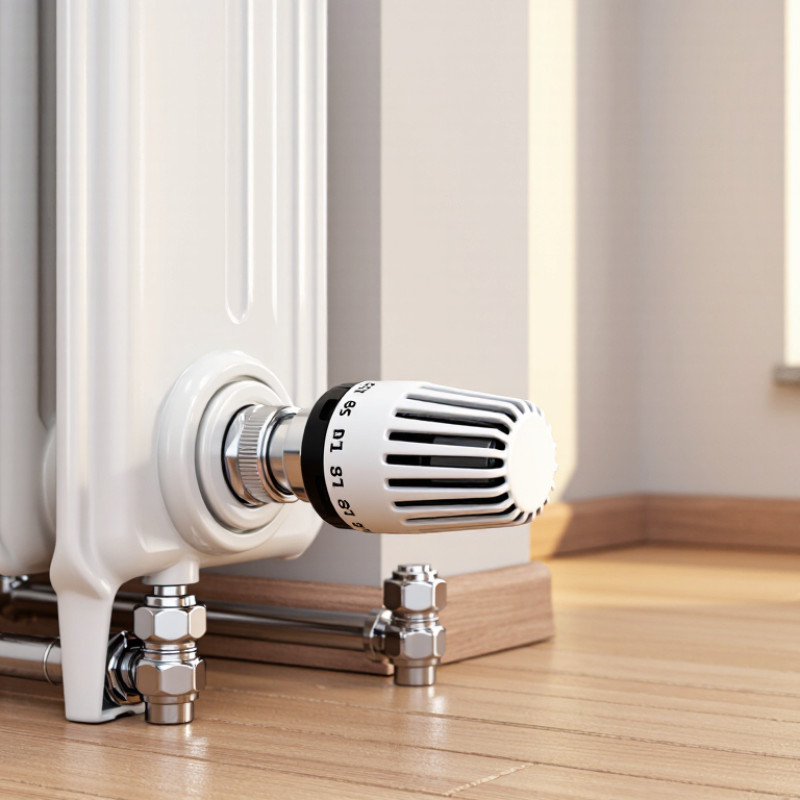
A thermostatic radiator valve, or TRV, is the adjustable control fitted to a radiator’s inlet. It usually has two parts: a valve body and a sensor head. Inside the head, wax or liquid expands as the nearby air warms. This pushes a pin into the valve and reduces hot-water flow. When the air cools, the sensor contracts and the valve opens again. No wiring is needed.
The dial responds to air around the radiator, not the whole home. A heavy curtain or sofa placed over the sensor can distort its reading. Small detail, big effect. The numbered scale is a guide, not a precise temperature display; settings vary by valve and room conditions.
In practical terms, a lower setting limits how warm that room becomes, while a higher setting allows more heat. Energy Saving Trust guidance estimates that heating accounts for roughly 55% of household energy bills in UK homes, which helps explain why room-by-room control matters.
A TRV does not create heat or control the boiler by itself. It only regulates flow through its radiator, and its response may feel slow in a cold room.
The Main Parts of a TRV
A TRV radiator valve has two main sections: the thermostatic head and the valve body. The head usually carries a numbered dial, which sets the room temperature you want. Inside it sits a temperature-sensitive element, often filled with liquid or wax. As room air warms, this element expands and presses a small pin inward. Small part, big effect.
The pin sits in the valve body, which connects to the radiator’s water inlet. When the pin moves inward, it reduces the opening and slows hot-water flow. As the room cools, the element contracts, allowing the pin to move back and more water to enter. The dial does not measure temperature like a digital thermometer; its numbers are settings, not exact readings. That distinction is easy to miss.
The head needs room air to sense changes. Heavy curtains, furniture, or a deep window ledge can trap warm air around it, causing the valve to close too soon. Some installations use a remote sensor when the head is difficult to position well. The connection nut secures the head to the valve body, but the two parts do different jobs: one senses and controls, while the other regulates water flow. The setup is simple, though placement can be less forgiving than it looks.
How a TRV Senses Room Temperature
A thermostatic radiator valve (TRV) senses the air around its head, rather than measuring the radiator’s water temperature. Inside, a temperature-sensitive element—often filled with wax or liquid—expands as the surrounding air warms. This movement presses a small pin in the valve, reducing hot-water flow through the radiator. When the air cools, the element contracts and the pin allows more flow. The change is gradual, not instant.
Position matters. A TRV tucked behind thick curtains or crowded by furniture may sense trapped warm air and turn the radiator down too early. A cold draught can have the opposite effect. Most heads use numbered settings, not precise room-temperature readings, so the same number may feel different in different rooms. It takes time. The valve also responds with a delay, and that lag is easy to underestimate on a chilly morning.
Tips: Keep the valve head clear, and avoid covering it with fabric. Set it to a comfortable level, then wait several hours before adjusting again. If the room stays uneven, check for blocked airflow or a poorly placed valve; the dial alone may not explain the problem.
How a TRV Regulates Radiator Heat
A thermostatic radiator valve (TRV) adjusts hot-water flow according to the temperature around its sensor. Inside the valve, a wax or liquid element expands as the room warms. It pushes a small pin, narrowing the valve opening and reducing heat from the radiator. When the room cools, the element contracts and allows more water through. The dial sets a target, not an exact temperature. Small movements matter.
Placement matters too. Heavy curtains or furniture can trap warm air around the sensor, making the valve close while the rest of the room stays chilly. A TRV also cannot directly control the boiler; it only regulates flow through its radiator. UK Department for Energy Security and Net Zero data identifies space heating as roughly three-fifths of domestic energy use, which makes room-by-room control relevant. But a valve alone does not guarantee savings: settings, insulation, and system balance all affect results. Even a careful setup may need adjustment after a cold evening.
How a TRV Regulates Radiator Heat
A thermostatic radiator valve (TRV) senses the room air temperature and adjusts the flow of hot water through the radiator. As the room approaches the setpoint, the valve reduces its opening; when the room is warm enough, it may nearly close. This illustrative chart shows the general pattern, not a precise calibration: actual valve behavior varies by model, installation and heating system.