
Top 10 Chemical Heating Equipment Suppliers Worldwide
Chemical Heating equipment supports processes where temperature stability, material compatibility, and dependable operation matter. A poorly matched heater can create uneven temperatures, unnecessary energy use, or maintenance challenges. Buyers therefore need more than a supplier’s product catalogue. They need evidence about operating ranges, control systems, service support, and experience with similar applications.
This guide introduces ten Chemical Heating equipment suppliers serving markets worldwide. It considers the practical questions behind a shortlist: Can the equipment handle the required duty? Are construction materials suited to the process fluid? Can the supplier provide useful technical documentation and responsive support? Details matter. A polished specification sheet is helpful, but it cannot replace application-specific engineering review. Nor does a global presence guarantee the right local service.
The selection mindset also benefits from a cautious process-industry principle. Chemical engineer and process-safety author Trevor Kletz is widely associated with the maxim, “If you do not have a good reason for doing something, you have a good reason for not doing it.” Applied here, it encourages buyers to ask why a design choice fits their actual process, rather than accepting familiar claims at face value. This overview is a starting point, not a substitute for technical validation. Supplier capabilities change, and published information may not tell the whole story. That limitation is worth remembering. A careful comparison should leave room for questions—and for revising an early preference when better evidence appears.
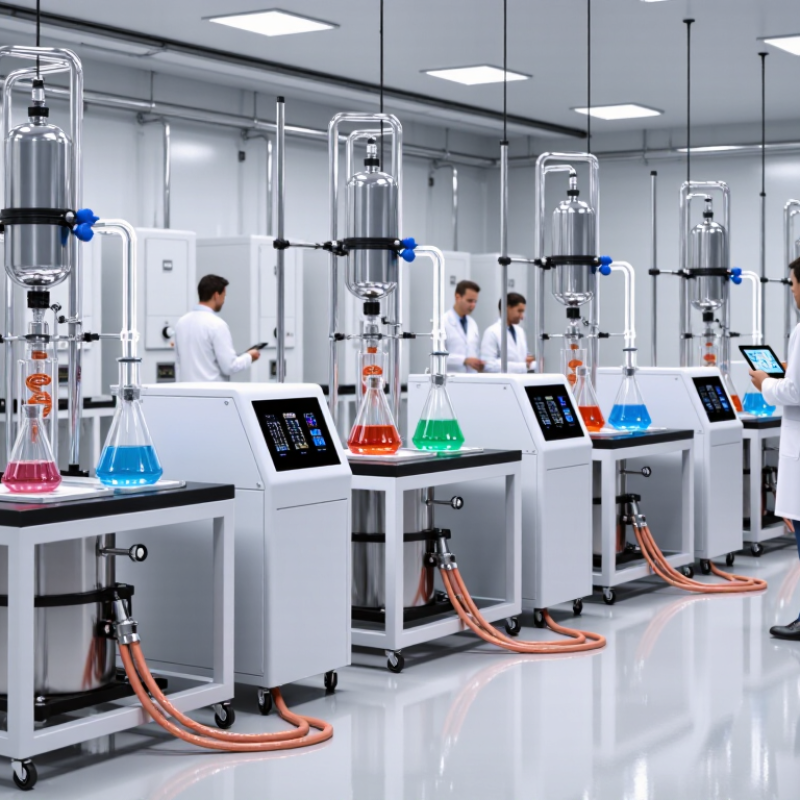
Chemical Heating Equipment: Scope and Industrial Applications
Chemical heating equipment supports controlled temperature management across chemical production, processing, and storage. Its scope includes electric heaters, thermal fluid systems, steam jackets, circulation units, and specialized heating assemblies. Each option serves different temperature ranges, heat-transfer needs, and process conditions.
In reactors, jacketed heating systems help maintain stable temperatures during mixing, polymerization, and crystallization. Storage tanks may require gentle heating to reduce viscosity and support reliable transfer. Heated pipelines prevent solidification around valves, bends, and loading points. Dryers and evaporators need uniform heat distribution, especially when moisture levels change during operation. A small temperature variation can affect product quality.
Selection should consider material compatibility, thermal efficiency, control accuracy, maintenance access, and emergency shutdown functions. Stainless steel surfaces often suit corrosive environments, but material choice still depends on concentration and operating temperature. Insulation reduces energy loss around tanks and pipework. It also protects workers from hot surfaces. In practice, suppliers should provide clear performance data, testing records, installation guidance, and service support.
The perfect system rarely exists. A highly efficient heater may require more complex maintenance. A simple design may consume more energy. Engineers should examine real operating cycles, not only catalogue ratings. They should also review cleaning procedures, spare-part availability, and control response during startup. A reliable assessment connects equipment design with daily plant conditions. That connection is sometimes overlooked.
Major Types of Chemical Process Heating Systems
Chemical plants use several heating systems, and each suits different process conditions. Electric resistance heaters deliver precise heat through elements placed inside tanks, vessels, or circulation loops. They respond quickly and work well where clean operation matters. However, element failure can create production delays if spare parts are not available.
Steam heating remains common for jackets, coils, and heat exchangers. It provides stable temperature control and transfers heat evenly across large surfaces. Thermal fluid systems are useful for higher temperatures without high-pressure steam. They circulate heated oil through jackets or external exchangers. Poor fluid monitoring, though, may cause deposits, pump wear, or uneven heating.
Direct-fired systems heat process air, gases, or selected vessels with combustion energy. They can offer strong output, but burner control and ventilation require careful engineering. Induction heating provides fast, localized heating for conductive metal components. It reduces contact with the product, yet installation may cost more and demand specialized maintenance. In plant assessments, reliable suppliers usually provide thermal calculations, material certificates, control diagrams, and clear maintenance schedules. I have found temperature uniformity more important than headline heating capacity. A powerful system can still perform poorly when sensors sit near the outlet. Testing should include startup behavior, shutdown response, insulation condition, and actual load changes. No system is perfect. Process teams should document these limits before selecting equipment.
Top 10 Chemical Heating Equipment Suppliers Worldwide - Major Types of Chemical Process Heating Systems
The entries below describe equipment types commonly supplied for chemical-process heating; they are not a ranking of suppliers. Operating limits depend on equipment design, materials, pressure, and the process medium.
| No. | Heating System Type | How It Heats the Process | Common Chemical-Process Uses | Key Selection Considerations |
|---|---|---|---|---|
| 1 | Shell-and-Tube Heat Exchanger | Transfers heat indirectly between fluids flowing on opposite sides of a tube bundle. | Heating or cooling process streams, feed preheating, and heat recovery. | Check pressure drop, fouling tendency, corrosion compatibility, cleanability, and design pressure and temperature. |
| 2 | Plate Heat Exchanger | Uses thin plates to transfer heat between separate fluid channels. | Heating relatively clean, low-to-moderate-viscosity liquids and recovering heat in compact installations. | Select gasketed, welded, or other construction to suit fluid compatibility, pressure, temperature, and cleaning needs. |
| 3 | Fired Process Heater | Combustion heats process fluid flowing through tubes inside a furnace enclosure. | High-duty heating of process streams in chemical and petrochemical plants. | Consider fuel supply, emissions, burner control, tube metallurgy, flow assurance, and protection against tube overheating. |
| 4 | Electric Circulation Heater | Electric resistance elements heat a liquid or gas as it circulates through a pressure vessel. | In-line heating of process liquids, gases, and heat-transfer fluids. | Evaluate electrical capacity, flow rate, element watt density, materials compatibility, and over-temperature protection. |
| 5 | Thermal-Fluid Heating System | A fired or electric heater warms a circulating heat-transfer fluid, which then supplies heat indirectly. | Jacketed reactors, dryers, calenders, and processes needing distributed indirect heat. | Match fluid chemistry and temperature limits to the duty; account for expansion, oxidation, leaks, and system maintenance. |
| 6 | Steam Heating System | Steam condenses in a coil, jacket, or exchanger and releases latent heat to the process. | Vessel and tank heating, indirect process heating, and plant-wide utility duties. | Consider steam pressure, condensate drainage, water hammer prevention, temperature control, and steam quality. |
| 7 | Immersion Heater | An electric element is immersed directly in a tank or vessel fluid. | Tank heating, maintaining liquid temperature, and heating compatible process fluids. | Check fluid compatibility, element surface loading, minimum liquid level, local overheating risk, and electrical-area classification. |
| 8 | Infrared Heating System | Radiant energy heats exposed surfaces; absorption depends on the material and emitter wavelength. | Surface drying, curing, and heating coatings or materials on continuous lines. | Assess line of sight, surface properties, distance, uniformity, ventilation, and combustible or solvent-vapor hazards. |
| 9 | Radio-Frequency or Microwave Heating | An electromagnetic field generates heat within suitable dielectric materials. | Specialized drying, moisture removal, and heating of materials with suitable dielectric properties. | Validate dielectric response, penetration depth, load uniformity, shielding, and electromagnetic safety controls. |
| 10 | Induction Heating System | An alternating magnetic field produces heat in electrically conductive materials or a conductive susceptor. | Localized heating of conductive components and specialized process equipment or materials. | Confirm electrical conductivity, geometry, coil placement, coupling efficiency, and temperature-control requirements. |
Criteria for Evaluating Global Equipment Suppliers
When evaluating global chemical heating equipment suppliers, compare their engineering evidence, not just catalogue claims. Ask for operating-temperature ranges, control accuracy, heating uniformity, and documented test results. A vessel may reach its target temperature while leaving colder zones near outlets or corners. Ask how suppliers verify performance under conditions similar to your process. Details matter.
Check whether wetted materials, seals, and insulation suit the chemicals, temperatures, and cleaning methods involved. Request material specifications and clear equipment drawings before comparing quotations. Strong suppliers explain design limits and identify information they still need from your team. That honesty is useful. A polished proposal alone is not proof of fit.
Assess installation guidance, operator training, spare-parts availability, and technical response across your operating regions. Ask for realistic service times, not broad promises. Review sample manuals and maintenance schedules; vague instructions can create delays later. Compare warranty terms and commissioning support in writing. No supplier is ideal in every category, and a low purchase price may hide extra integration work. Record your assumptions, then verify key details with process and maintenance staff.
Profiles of Ten Leading Chemical Heating Equipment Suppliers
Profiles of ten leading chemical heating equipment suppliers should compare engineering capability, not just product range. Some specialize in shell-and-tube exchangers for steady heat transfer; others build electric immersion heaters for compact vessels. Several focus on thermal-fluid systems, steam equipment, jacketed reactors, or packaged heating skids. A useful profile explains each supplier’s design scope, materials experience, temperature range, and ability to support installation. These details help buyers distinguish a catalog supplier from a partner able to review a process specification.
Supplier strength also depends on practical support. Look for clear drawings, documented material traceability, control-system integration, and accessible maintenance guidance. Ask how equipment handles temperature variation, cleaning access, and the actual fluid being heated. A polished brochure is not proof of dependable service. Some profiles may leave gaps; that deserves a follow-up, not an assumption. Details matter.
Tips: Compare the same duty conditions across all ten profiles, including capacity, operating temperature, and available utilities. Request references for similar process applications, then verify what the supplier delivered. Check spare-part lead times and commissioning support before shortlisting. Small omissions can become expensive later.
Supplier Capabilities, Technologies, and Market Reach
Chemical heating equipment suppliers vary in engineering depth, not just product range. Strong suppliers can size jacketed vessels, circulation heaters, and heat exchangers for a process’s actual temperature and flow needs. They should explain control options, such as sensor placement, ramp rates, and over-temperature protection. Small details matter. A poorly placed sensor can create uneven heating, even when the heater itself is correctly rated.
Tips: Ask for a sample equipment specification and a clear explanation of its assumptions. Check whether spare parts, commissioning support, and technical documentation are available in your region. Compare response times, not only quoted prices. A low-cost proposal may leave service gaps.
Market reach is more than shipping equipment across borders. It includes local technical support, replacement components, and familiarity with the site’s utility conditions. Suppliers may offer steam, thermal-oil, or electric heating systems; the best fit depends on process demand and operating constraints. One limitation is that supplier claims can be difficult to compare directly. Request references for similar duties, then verify the details. A polished brochure is useful, but it cannot show how a system performs during a difficult startup.
Top 10 Chemical Heating Equipment Suppliers Worldwide - Supplier Capabilities, Technologies, and Market Reach
Indicative upper process-temperature capabilities of common industrial heating technologies (°C)
This supplier-independent comparison highlights technologies used across chemical processing. Values are indicative engineering limits, not supplier rankings or guaranteed operating specifications; actual capabilities depend on equipment design, materials, pressure, and process conditions.