
What Are the Top Ceiling Panel Light Types in 2026?

A ceiling can look simple from below. The right Ceiling Panel Light, however, depends on what happens in the room: a classroom needs even illumination, while a home office benefits from controlled glare and adjustable color temperature. Lighting researcher Dr. Mariana Figueiro has described light as “a powerful drug,” a reminder that lighting affects more than visibility. Her research focuses on light and human health; it does not mean every panel has the same effect. Still, it makes thoughtful selection worth the effort.

In 2026, buyers will encounter familiar options with distinct trade-offs. Edge-lit panels are typically thin, making them useful where ceiling depth is limited. Back-lit models place LEDs behind the diffuser and may suit projects seeking uniform output. Recessed troffers fit many suspended-grid ceilings, while surface-mounted panels offer an alternative when a ceiling cavity is unavailable. Tunable-white versions allow color temperature adjustments, but their controls and settings should match how people use the space. A specification sheet matters. Check dimensions, lumen output, color rendering, glare information, dimming compatibility, and warranty terms before comparing prices. A bright panel can still feel harsh. That detail is easy to miss.

This guide examines the leading panel types, their practical strengths, and the questions to ask before choosing one. The best option is not automatically the newest or brightest. Room layout, ceiling construction, and daily tasks should lead the decision.
What Are the Top Ceiling Panel Light Types in 2026?

What Ceiling Panel Lights Are and How They Work

A ceiling panel light is a shallow fixture that spreads light across a broad, usually flat surface. Inside, LED chips produce light when an electrical current passes through semiconductor material. A driver regulates that current, while a diffuser or light guide softens bright points into a more even glow. The result can look like a luminous ceiling tile rather than a row of visible bulbs. That matters.

Most panels use edge-lit or back-lit designs. Edge-lit models send light from LEDs around the frame through a guide plate; back-lit models place LEDs behind the diffuser. Both need a driver, and some support dimming only with a compatible control. Check the fixture’s specifications before installation. Poorly matched controls can cause flicker, which is uncomfortable at a desk or kitchen counter.

The U.S. Department of Energy’s LED lighting guidance reports that LEDs use at least 75% less energy and can last up to 25 times longer than incandescent lighting. Those figures describe LED technology generally, not the guaranteed performance of every panel. The International Energy Agency estimates lighting accounts for about 15% of global electricity use, underscoring why efficient fixtures matter. Still, efficiency alone does not promise good light. Color quality, glare, and how evenly a panel lights the room deserve attention. A bright panel can feel harsh. My own practical caution: advertised performance is not a substitute for checking the actual room.

Which Ceiling Panel Light Types Are Most Popular in 2026?

In 2026, slim LED flat panels remain a popular choice for offices, kitchens, and other rooms needing broad, even light. Edge-lit panels use LEDs around the frame, making them thin and lightweight. They suit shallow ceilings and clean, modern interiors. Very slim. Backlit panels place LEDs behind the diffuser, often producing more consistent illumination across the surface. That can help reduce bright spots above a desk or counter.

Many buyers also favor panels with selectable color temperature or dimming. A warm setting can feel comfortable in a dining area, while a cooler setting may make detailed tasks easier. Controls and compatibility vary, so check them before installation. One easy mistake is choosing by appearance alone. Measure the ceiling opening, confirm the panel’s dimensions, and check whether the driver can be reached later. Glare matters, too: a bright panel can feel harsh when viewed directly. I would not assume every “dimmable” model works with every wall control; verify the specifications for the exact setup.

How Do Recessed, Surface-Mounted, and Suspended Panels Differ?

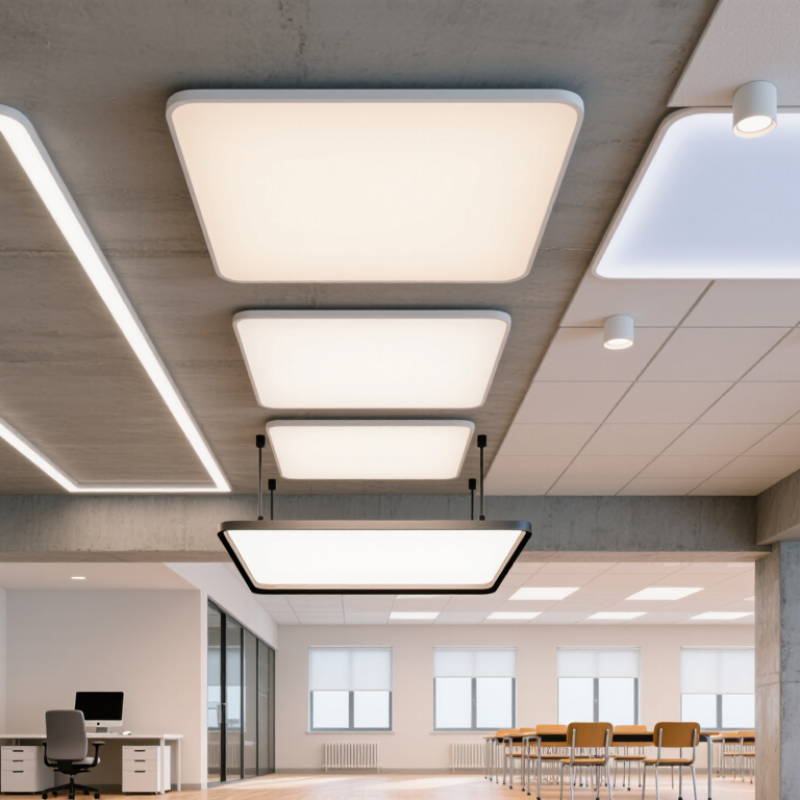
In 2026, choosing a ceiling panel is less about appearance than ceiling depth, access, and how the room is used. Recessed panels sit flush within a suspended grid or ceiling cutout, giving offices and kitchens a clean, low-profile look. They need enough cavity depth and clear space for wiring, drivers, and heat management. Check the ceiling before ordering; a shallow void can turn a straightforward installation into a compromise.

Surface-mounted panels attach directly to the ceiling, making them useful for concrete slabs, corridors, and retrofit projects where cutting openings is impractical. The trade-off is a visible frame and a small projection that may catch the eye in low-ceiling rooms. Suspended panels hang on cables or stems, so installers can position light over worktables and create visual layers in high spaces. They also need secure fixing points and careful cable adjustment. A panel that hangs crooked is hard to ignore.

Light output matters, too. The U.S. Department of Energy’s LED guidance says LEDs use at least 75% less energy than incandescent lighting and can last up to 25 times longer. That comparison is not a direct test of panel designs, but it supports checking efficacy, dimming compatibility, and replacement access. A suspended fixture may be easier to reach; a recessed one may look neater. Real rooms are messier than spec sheets. Measure the ceiling, note nearby ducts, and confirm the panel’s driver can be serviced.

What Are the Top Ceiling Panel Light Types in 2026? How Do Recessed, Surface-Mounted, and Suspended Panels Differ?

Comparison Recessed Panel Surface-Mounted Panel Suspended Panel
How It Is Installed Set into a compatible ceiling opening, commonly in a suspended grid or a cut-out ceiling. Fixed to the ceiling surface, often with a mounting frame or bracket. Hung below the ceiling using suspension cables, wires, or rods.
Appearance Sits nearly flush with the ceiling for a clean, integrated look. Projects below the ceiling; the panel and its frame remain visible. Creates a visible feature below the ceiling and can define a space.
Ceiling Requirements Needs a suitable opening, adequate clearance, and a compatible ceiling structure. Works where there is no suitable recess, provided the ceiling can support the fixture. Needs a secure fixing point and enough vertical clearance for the hanging fixture.
Installation Considerations May require a cut-out, ceiling-grid compatibility checks, and access for the driver and wiring. Usually avoids cutting a panel opening, but the mounting surface and fixing points must be suitable. Requires careful positioning, secure supports, and adjustment of suspension length.
Typical Applications Offices, classrooms, healthcare spaces, and other rooms with compatible grid or cut-out ceilings. Concrete ceilings, retrofit projects, corridors, and rooms without a recessed ceiling cavity. High ceilings, open-plan spaces, reception areas, and locations where light needs to hang lower.
Main Advantage Low-profile installation that blends into the ceiling. Can be installed without recessing the panel into the ceiling. Can bring the light closer to the working area and add visual emphasis.
Main Limitation Not suitable for every ceiling; recess depth, access, and ceiling construction can limit installation. Remains visible below the ceiling and may not suit rooms where a flush appearance is preferred. Can obstruct views or movement if positioned too low; suspension and support need careful planning.
Best Choice When A flush look is desired and the ceiling is designed or prepared for recessed installation. A straightforward ceiling-mounted option is needed without a suitable recess. A suspended look or a lower lighting plane is desired and the ceiling can support it.
Selection Note Mounting style alone does not determine light output, glare, color quality, or energy use. Compare the panel’s specifications, including lumen output, efficacy, color temperature, color rendering, glare rating, dimming compatibility, and applicable safety requirements.

Note: Installation details and compatibility vary by product and ceiling construction. Confirm dimensions, clearances, support requirements, and local electrical requirements before installation.

What Sets Edge-Lit, Backlit, and Tunable-White Panels Apart?

What Are the Top Ceiling Panel Light Types in 2026?

What Sets Edge-Lit, Backlit, and Tunable-White Panels Apart?

Edge-lit panels place LEDs around the frame, directing light through a flat guide plate. The result is a slim fixture that suits shallow ceilings and tidy office grids. In a quiet meeting room, that low profile can make the ceiling feel less crowded. Light distribution depends on the guide and diffuser, though; poor design may leave visible bright edges. Slim does not always mean evenly lit.

Backlit panels position LEDs behind the diffuser. Their layout can produce consistent illumination across the face, and they may be a practical choice where ceiling depth allows. Tunable-white panels are different: the term describes adjustable color temperature, not a separate lighting layout. A panel can combine tunable white with edge-lit or backlit construction. Cooler settings can help with alert, task-focused spaces; warmer light often feels gentler in the evening. Controls matter, and complicated settings may go unused.

How to Match a Ceiling Panel Light to Its Room and Purpose

Choosing a ceiling panel light starts with the room, not the fixture. A recessed panel suits a low ceiling and a clean, unobtrusive look. Surface-mounted panels work where a ceiling cavity is unavailable, such as a concrete hallway. Suspended panels can help define a work area beneath a high ceiling. Each style changes how light feels in the space.

For kitchens and offices, even illumination helps reveal details on counters and desks. A diffused panel can soften glare on glossy surfaces, though the result depends on placement and finish. In bedrooms or lounges, a dimmable panel with a warmer color temperature may feel less stark. Check the product’s color-rendering information if accurate color matters, such as when choosing clothing or preparing food. Small details matter.

Match brightness to room size and task, using the manufacturer’s guidance rather than choosing by appearance alone. In a narrow corridor, one oversized panel can feel harsh; several smaller fixtures may distribute light more evenly. Not always. Ceiling height, wall color, and daylight can change the outcome, so a plan that looks right on paper may need adjustment. For new wiring or uncertain mounting conditions, consult a qualified installer.