
How to Choose the Right Cryo Chiller for Your Needs?
Choosing the right Cryo Chiller starts with the process, not the product brochure. A microscope stage, superconducting magnet, and production line can require very different cooling behavior. Temperature range matters, but so do cooling capacity, stability, ramp time, and heat rejection. A unit that reaches the target temperature may still struggle when the load changes or ambient conditions rise.
NIST cryogenic property data put nitrogen’s normal boiling point near 77.36 K and helium-4’s near 4.22 K. These reference values show why “low temperature” is not a complete specification. ASHRAE’s Handbook—Refrigeration likewise emphasizes matching equipment to operating conditions, loads, and heat-rejection requirements. Use those principles to compare candidate chillers, and verify performance against published capacity curves at your actual operating temperature. Small details matter.
Before requesting quotes, record the required temperature, peak and steady-state heat loads, allowable temperature variation, and available utilities. Note the installation space, ventilation, noise limits, and whether the system must run continuously. Ask suppliers for test conditions, maintenance intervals, and service support—not just headline capacity. A useful comparison should include lifecycle costs and the consequences of downtime. Some projects also need fast cooldown; others value stable operation more. It is easy to overlook how tubing, insulation, and frequent door openings affect the real load. That estimate may need revision after testing. The right choice is therefore the chiller that meets measured process needs reliably, not simply the coldest or largest model.
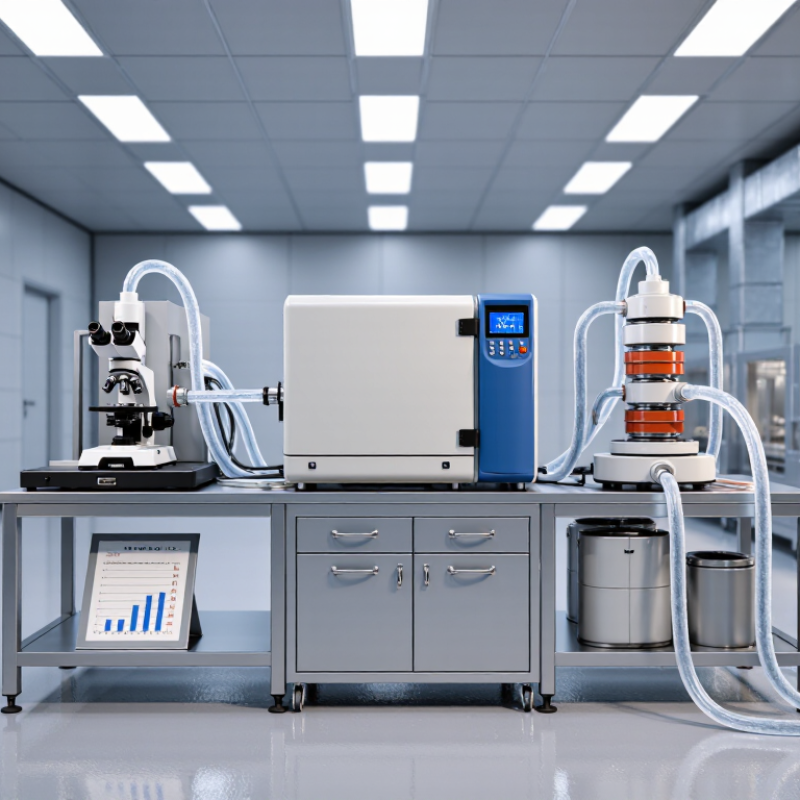
Identify Your Cooling Requirements and Operating Conditions
Choosing a cryo chiller starts with the process, not the lowest temperature on a brochure. Record the required setpoint, allowable temperature drift, cooling capacity, flow rate, and cooldown time. Include heat from the sample, fixtures, piping, and repeated door or vessel access. Small details matter. A warm sample introduced every hour can create a larger load than steady operation suggests.
Measure the real operating conditions: room temperature, ventilation, altitude, duty cycle, and available electrical supply. Check the fluid’s compatibility and viscosity at the target temperature, then confirm the chiller can maintain the required flow against system pressure losses. The International Institute of Refrigeration’s 2023 report estimates refrigeration uses about 20% of global electricity. That is a useful reminder to compare energy use at your actual operating point, not only at rated conditions.
Ask for performance data across the full temperature range and at the warmest expected ambient condition. Confirm whether capacity ratings include startup pull-down or only steady-state operation. They may not. A simple load estimate is useful, but it can miss heat leaks and changing sample loads; leave a documented margin and validate performance during commissioning.
Compare Cryo Chiller Types and Temperature Ranges
How to Choose the Right Cryo Chiller for Your Needs?
Cryo chiller temperature ranges depend on both cooling technology and workload. Single-stage Stirling units commonly operate around 40–80 K, while two-stage Gifford-McMahon or pulse-tube systems may reach roughly 4–20 K. These are typical ranges, not guarantees. A warm sample, frequent door openings, or a heavy fixture can raise the operating temperature. Liquid-nitrogen cooling stays near 77 K, but requires regular replenishment and suitable handling procedures. That trade-off matters.
Match the chiller’s stable operating range to your sample, not just its lowest advertised temperature. Check cooling capacity at the temperature you need; capacity often falls as the target gets colder. Also compare cooldown time, vibration, noise, maintenance access, and available space. For delicate measurements, a pulse-tube system may reduce vibration compared with some mechanical alternatives. For routine work near 77 K, liquid-nitrogen cooling may be simpler. I would verify performance under the actual load. Specifications can look reassuring, yet a real setup may behave differently.
Tips: Ask for a temperature-versus-load curve, and confirm whether the quoted temperature refers to the cold head or your sample. Leave room for wiring and airflow. A small margin helps.
Match Cooling Capacity and Performance to Your Process
Choosing a cryo chiller starts with the process heat load, not the lowest temperature on a specification sheet. Estimate heat entering from the equipment, materials, piping, and room environment. Then consider peak demand, such as a rapid startup or a short, intensive production cycle. Average load alone can be misleading. A calculated load is only a starting point; piping losses and changing batch conditions are easy to overlook.
Check that cooling capacity is available at your actual operating temperature, since output can change as the setpoint drops. Match the chiller’s flow rate and pump pressure to the process, including hose length and fittings. Small details matter. Coolant compatibility, temperature stability, and continuous-duty performance also affect results. If temperature swings disrupt a test or product, tighter control may matter more than extra peak capacity. Leave a practical margin, but avoid oversizing without reason: it can add cost and may cause inefficient cycling. Review operating data after installation and adjust expectations if real-world loads differ from the estimate.
How to Choose the Right Cryo Chiller: Match Capacity to Your Process
Compare each process heat load with an example chiller capacity target that includes a 25% sizing allowance.
Values are illustrative sizing examples, not universal equipment specifications. Confirm the chiller’s available cooling capacity at your required fluid supply temperature and operating conditions; capacity can vary significantly with temperature.
Check Space, Utilities, Controls, and Safety Requirements
A cryo chiller can fit the temperature target and still fail the room. Measure the route from the loading door, not just the final floor space. Include service clearance, door swing, exhaust path, and room height. Check the unit’s heat rejection against the room’s ventilation capacity. A warm equipment room can reduce cooling performance, even when the chiller itself is correctly sized.
Utilities need equal scrutiny. Compare the nameplate voltage, phase, current, and startup load with available power. Confirm water quality, flow, pressure, and drain capacity if the unit is water-cooled. Ask the supplier for heat-load data at your actual operating temperature and ambient conditions. A brochure’s nominal capacity may not match your process. I would double-check.
Controls should connect cleanly to your facility system. Confirm alarm outputs, remote monitoring, sensor accuracy, and restart behavior after a power interruption. For safety, identify refrigerant or cryogen leak risks, ventilation needs, and emergency shutdown access. Where liquid nitrogen is used, NIST lists its normal boiling point as 77.34 K, or about -195.8°C. OSHA defines an oxygen-deficient atmosphere as below 19.5% oxygen. These figures make ventilation and oxygen monitoring practical design checks, not optional extras. Leave space for maintenance, too; crowded panels are easy to overlook during planning.
Assess Lifecycle Costs, Maintenance, and Service Support
A cryo chiller’s purchase price is only one part of its cost. Compare expected energy use, planned maintenance, replacement parts, and the cost of downtime over its working life. Ask for power data at your actual operating temperatures and load, not only at a best-case test point. Small details matter. A unit that runs continuously may use far more electricity than its rated figures suggest.
Check what routine service involves: filter changes, coolant checks, leak inspections, and access to wear parts. Confirm how quickly qualified technicians can respond, whether remote diagnostics are available, and which parts are kept in local stock. Ask for a written service schedule and clear response-time commitments. Then compare those terms, not just the quoted service fee. A low annual contract can offer little value if a critical component takes weeks to arrive.
During commissioning, log temperatures, power draw, alarms, and operating hours. These records help you spot drift before it becomes an outage. A spreadsheet will still miss some real-world costs, especially production delays, so treat estimates as estimates. Review them against actual service records after the first year. Check that maintenance tasks fit your team’s skills and available shutdown windows. A complicated procedure can be costly even when parts are inexpensive.
How to Choose the Right Cryo Chiller for Your Needs? — Assess Lifecycle Costs, Maintenance, and Service Support
| Assessment Area | What to Compare | Lifecycle-Cost and Maintenance Implications | Questions and Evidence to Request |
|---|---|---|---|
| Cooling capacity and temperature range | Required cooling load at the actual operating temperature, including startup, peak load, heat leak, and expected future demand. | A unit that is undersized may struggle to maintain temperature; excessive oversizing can increase purchase cost and may reduce efficiency at typical loads. | Request performance data at the required temperature and load—not only nominal capacity—and confirm the operating range under site conditions. |
| Initial and installation cost | Equipment price, controls, piping, electrical work, ventilation, foundations, commissioning, and any facility upgrades. | The equipment price alone may not represent the installed cost. Site utilities and integration work can materially affect the project budget. | Ask for a clearly itemized quote, installation scope, commissioning requirements, and a list of excluded work. |
| Energy and utility use | Electrical input at representative operating loads, expected annual operating hours, and any cooling-water or ventilation requirements. | Energy use accumulates over the service life. Water-cooled equipment may also require water treatment and heat-rejection equipment; air-cooled equipment needs adequate airflow and room heat management. | Request power-consumption data across the operating range and calculate annual use using the facility’s actual hours and electricity tariff. |
| Maintenance requirements | Scheduled inspections, filter and fluid checks, pump and seal service, heat-exchanger cleaning, and refrigerant-system inspection where applicable. | Maintenance tasks and intervals vary by design, operating conditions, and manufacturer guidance. Poor airflow, contaminated process fluids, or unsuitable water quality can increase service needs. | Obtain the maintenance schedule, required technician skills, consumables list, and estimated labor and parts costs. Confirm which tasks can be done by in-house staff. |
| Consumables and operating supplies | Process fluid, filters, refrigerant-related service, water-treatment chemicals, and other routine supplies specified for the system. | Recurring supply costs depend on fluid compatibility, contamination risk, leakage, and operating conditions. Refrigerant handling must follow applicable regulations. | Ask for approved fluid specifications, replacement guidance, expected consumption assumptions, and any handling or disposal requirements. |
| Reliability and downtime | Operating history for comparable applications, alarms, protective controls, redundancy options, and recovery time after a fault. | Downtime can cost more than a difference in purchase price when the cooled process is production-critical or a test must be repeated. | Discuss failure-response procedures, diagnostic access, recommended critical spares, and how the system behaves during a power or cooling interruption. |
| Service support and spare parts | Technical support availability, technician coverage, service hours, parts lead times, and support for controls and software. | Limited local support or long parts lead times can extend outages and increase service costs, especially for specialized components. | Request written service terms, response-time targets, escalation contacts, parts availability information, and the duration of software and parts support. |
| Warranty and service contract | Warranty duration and coverage, exclusions, labor and travel charges, preventive-maintenance plans, and renewal terms. | A warranty may cover parts but exclude labor, travel, consumables, or damage caused by operating conditions. Contract value depends on actual coverage and response commitments. | Review the complete terms, claim process, required maintenance records, and what is—and is not—included in each service option. |
| Safety and site requirements | Electrical protection, heat rejection, ventilation, pressure-related hazards, fluid handling, and applicable local safety requirements. | Facility modifications and safety equipment can add installation and inspection costs. If liquid nitrogen is used, oxygen-displacement risks and ventilation requirements need a site-specific assessment. | Request installation and safety documentation, utility requirements, and a review by the facility’s qualified safety and engineering personnel. |
| End-of-life and lifecycle estimate | Expected service life for the proposed duty, overhaul options, refrigerant or fluid recovery, disposal, and replacement planning. | Lifecycle cost is more useful than purchase price alone. Estimate it using purchase and installation, energy, water and consumables, planned maintenance, service, downtime, and end-of-life costs. | Ask for the assumptions behind any lifecycle estimate and compare options over the same analysis period, operating schedule, energy price, and maintenance scope. |
Note: Maintenance intervals, operating costs, and service life are system- and site-dependent. Use the equipment documentation and a site-specific quotation for budgeting; the categories above are a general comparison framework, not guaranteed cost figures.