
How to Choose a Robot Fence in 2026?
Choosing a Robot Fence in 2026 starts with the machine you need to contain. A robotic mower, warehouse unit, and home patrol robot have different speeds, sensors, and stopping distances. Match the fence to the robot’s real operating environment, not just its product description. A narrow garden path, wet grass, metal shelving, or a busy doorway can expose weaknesses that look minor on paper.
A dependable Robot Fence should guide movement without confusing sensors or creating blind spots. Check its height, materials, connection points, and resistance to weather or impact. For electronic boundaries, confirm compatibility with the robot’s navigation system and test the signal near walls, gates, and other equipment. Measure the space. Watch a full operating cycle. Small gaps matter.
As an illustrative expert voice—not a verified quotation—robotics engineer Mara Ellis puts the principle this way: “A fence works only when the robot can read its limits reliably, every time.” Treat that as a testable design rule, not a guarantee. The right choice also depends on maintenance, setup time, and how easily people can access the enclosed area. Some installations will need adjustment after the first week. That is normal, though it deserves attention. This guide examines the key fence types, compatibility checks, safety features, and practical trade-offs to help you make a sound choice in 2026.
Understand Robot Fence Types and How They Work
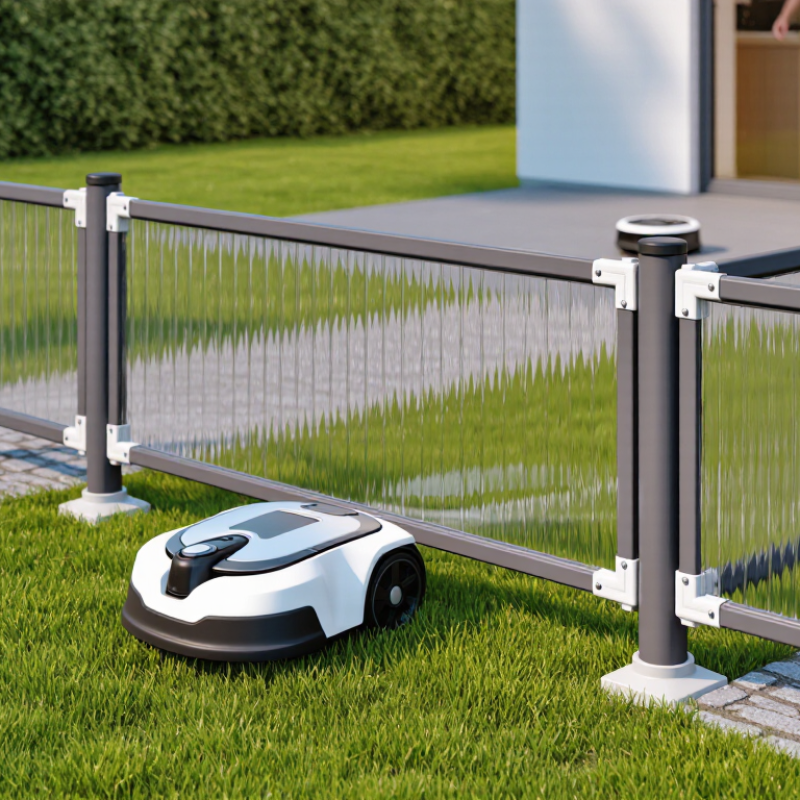
A robot fence can mean a physical barrier or an invisible boundary that tells a machine where to stop. A low physical fence blocks movement directly, making it useful near flower beds, ponds, or drop-offs. Check its height and gaps: a small robot may squeeze through spaces that look harmless. It is simple, but it can limit access and make trimming edges harder.
Electronic fences work differently. A buried perimeter wire carries a signal, and the robot follows or detects it through an onboard sensor. Installation takes care: sharp bends, loose connections, or later digging can disrupt the boundary. Wireless systems use positioning signals to define a mapped area, so they avoid wire installation. Trees, narrow passages, slopes, or nearby structures may weaken accuracy, however. A clean map can still be wrong. Before choosing, compare the area’s shape, terrain, and obstacles with the system’s stated operating limits. Test boundary behavior in a small section, then watch how the robot handles corners and paths. No setup is perfect. Recheck it after moving garden objects or changing the layout.
How to Choose a Robot Fence in 2026? Understand Robot Fence Types and How They Work
Illustrative Safety-Sensor Approach Distance vs. Response Time
How to read this chart: The bars show an illustrative calculation using an assumed approach speed of 1.6 m/s: approach distance = speed × total response time. For example, a 300 ms response time gives 480 mm. These values exclude intrusion allowances and other safety factors; they are not ready-to-use safety distances.
Common robot-fence options: Fixed mesh or panel guards physically prevent access; interlocked gates stop or inhibit hazardous motion when opened; distance guards keep people outside the robot’s reach. Light curtains and safety laser scanners detect entry and can trigger a stop, but are often used alongside physical guarding rather than as a fence. Choose and position safeguards through a site-specific risk assessment and applicable safety standards.
Assess Your Site, Boundaries, and Operating Conditions
How to Choose a Robot Fence in 2026?
Assess the whole work area, not just the robot’s reach. Walk the cell with a tape measure and note conveyors, columns, floor slopes, and nearby workstations. Mark every access point, including service doors and places where materials enter. Small gaps matter. A fence that fits the drawing may still leave awkward access or interfere with daily tasks. The International Federation of Robotics reported 4.28 million industrial robots in operation worldwide in 2023 (World Robotics 2024). That scale makes careful boundary planning essential.
Match the enclosure to the operating conditions. Consider impact risks, dust, moisture, cleaning routines, and the space technicians need for maintenance. Check guard construction against ISO 14120, and assess openings and safety distances using applicable risk-assessment guidance, including ISO 13857. Do not assume a fence alone makes a cell safe; access control, stopping performance, and operating procedures also matter. A common planning miss is measuring only when equipment is idle. Observe production changes and material flow, too. Recheck after installation. Real sites are rarely as tidy as the plan.
Compare Compatibility, Materials, and Control Systems
A robot fence should match the machine it is meant to guide, not just its advertised size. Check the robot’s operating manual for supported boundary signals, connector types, and any limits on cable length. A plug that fits does not always mean the system communicates correctly. Small details matter. If several robot models share the same yard, confirm that the fence can keep their zones separate.
Material choice depends on where the fence will sit. For outdoor wire, look for insulation rated for sunlight and moisture, especially near sprinklers or damp soil. A thin cable may be easier to hide, but it can be more vulnerable to garden tools and animal activity. Rigid barriers need stable posts and smooth edges; gaps near corners can let a robot slip through. Even then, compatibility is not always as tidy as a chart suggests.
Control systems deserve a hands-on check. Some fences use a simple signal generator, while others rely on settings in an app or control unit. Make sure the system offers clear boundary adjustments and a visible fault alert. Before burying cable, lay it temporarily and test narrow turns, gates, and the area around charging points. Test it outdoors. One overlooked corner can cause repeated detours, and the fix may mean moving the cable rather than changing the robot.
Check Safety Features, Installation, and Maintenance Needs
How to Choose a Robot Fence in 2026?
Check Safety Features, Installation, and Maintenance Needs
A robot fence should match the machine’s reach, speed, and work area—not just its footprint. The International Federation of Robotics reported 4,281,585 industrial robots operating worldwide in 2023, underscoring how many workplaces must plan for robot-cell safety. Treat that figure as context, not proof that one fence design suits every site. Start with a documented risk assessment and check the relevant robot-system safety standards.
Inspect the details workers will use every day. Look for secure panels, correctly positioned access gates, and interlocks that stop motion when a gate opens. Confirm the fence prevents reaching over, under, or through to hazardous areas. Then test the stop function during commissioning; a gate that closes neatly is not enough. Small gaps matter.
Installation and upkeep deserve equal attention. Check floor conditions, anchor points, cable routes, and clearance for maintenance access before ordering panels. Ask who will inspect interlocks, fasteners, and damaged mesh, and how often. Keep inspection records. Still, check twice. A poorly placed post can obstruct service access, while a loose panel may go unnoticed until someone leans on it. Revisit the layout after equipment or workflow changes; even a good plan can age badly.
Compare Total Costs and Choose the Best-Fit Fence
A robot fence is not just a mesh panel around a machine. It is part of a safety system, and the cheapest quote may omit doors, interlocks, anchors, or installation. The International Federation of Robotics reported 541,302 industrial robot installations worldwide in 2023, with 4.28 million robots operating in factories. More automation makes well-planned access control essential. Fit matters.
Compare the full installed cost: panels, posts, gates, safety switches, wiring, floor work, and commissioning. Then estimate ongoing costs, including inspection, repairs, and production stops when a damaged gate needs attention. OSHA’s machine-guarding standard, 29 CFR 1910.212, requires guarding against hazards such as those created by moving machine parts. A fence alone may not address every risk; assess reach-through gaps, robot motion, and access needs with a qualified safety professional.
Choose a design that matches the cell, not an imagined standard layout. Measure the robot’s working envelope and leave room for maintenance access. A tight corner can look efficient on a drawing, then obstruct a technician carrying a tool case. Compare options over their expected service life, and ask suppliers to itemize exclusions. These estimates can still miss future layout changes. That is worth admitting.
| Fence type | Typical construction | Best suited for | Key advantages | Main trade-offs | Illustrative installed cost* | Estimated 5-year total cost* | Planning note |
|---|---|---|---|---|---|---|---|
| Welded-wire steel panels | Steel mesh panels attached to posts, with a hinged access gate. | General-purpose industrial robot cells where visibility and a robust physical barrier are priorities. | Good visibility; durable; panels can often be reconfigured or replaced individually. | Mesh openings and clearances must be selected to prevent access to hazardous areas; cut edges and damaged coatings need attention. | About $3,000–$6,000 | About $3,500–$7,500 | A practical baseline for many standard indoor cells. Check reach-through distances and access points during the risk assessment. |
| Modular aluminum framing | Extruded-aluminum frames with mesh, solid panels, or mixed infill. | Cells that may need frequent layout changes, expansion, or integration with conveyors and tooling. | Flexible to modify; relatively easy to assemble; infill can be selected for different visibility needs. | Usually costs more than basic steel panels; connections and anchoring must be suitable for expected loads. | About $5,000–$9,000 | About $5,500–$10,500 | Useful when reconfiguration costs matter. Confirm that the completed enclosure—not just the frame—meets the required protective function. |
| Solid-panel enclosure | Steel or impact-resistant polymer panels, sometimes combined with viewing windows. | Applications requiring a physical screen for sparks, splashes, debris, or restricted visibility into the cell. | Can help contain process hazards and limit viewing or access through the enclosure. | Less visibility and airflow; may need service panels, windows, or ventilation openings designed for the hazard. | About $6,500–$12,000 | About $7,200–$14,000 | Choose panel materials and thickness based on the actual process hazard; a solid appearance alone does not establish impact resistance. |
| Corrosion-resistant steel enclosure | Stainless or similarly corrosion-resistant panels, posts, and hardware. | Washdown, humid, or corrosive environments where ordinary coated steel may require more upkeep. | Better resistance to corrosion in suitable environments; can reduce coating-related maintenance. | Higher initial cost; material grade and cleaning chemicals should be matched to the environment. | About $8,000–$15,000 | About $8,500–$16,800 | Evaluate the full environment, including cleaning agents and joints. “Stainless” does not mean immune to corrosion in every application. |
| Hybrid guarded cell | Physical fencing combined with interlocked gates and, where appropriate, safety-rated presence-sensing devices. | Cells with frequent operator access, material loading, or different access requirements around the perimeter. | Can balance physical separation with controlled access and shorter task-specific access routes. | More components to design, validate, inspect, and maintain; sensing devices do not replace guarding where a physical barrier is required. | About $6,000–$14,000 | About $7,000–$17,000 | Device selection and placement must follow a machinery risk assessment. Include safety-system integration and validation in the project budget. |
Cost assumptions: The ranges are illustrative 2026 USD planning estimates, not supplier quotations or a market survey. They assume one indoor robot cell with approximately 10 m of enclosure perimeter, roughly 2 m-high guarding, one interlocked access gate, basic installation, and routine maintenance over five years. Site conditions, local labor rates, materials, shipping, engineering, electrical work, and safety-system complexity can change costs substantially. Confirm scope and pricing with qualified integrators.
Safety reminder: Select and install guarding through a documented machinery risk assessment. Applicable requirements depend on the machine, location, and use; relevant standards may include ISO 12100, ISO 14120, ISO 13857, and the applicable edition of ISO 10218. A fence by itself does not guarantee a safe robot cell—access control, stopping performance, safe distances, and validation also matter.