How to Choose the Best AC EV Charger at the 2026 Canton Fair?
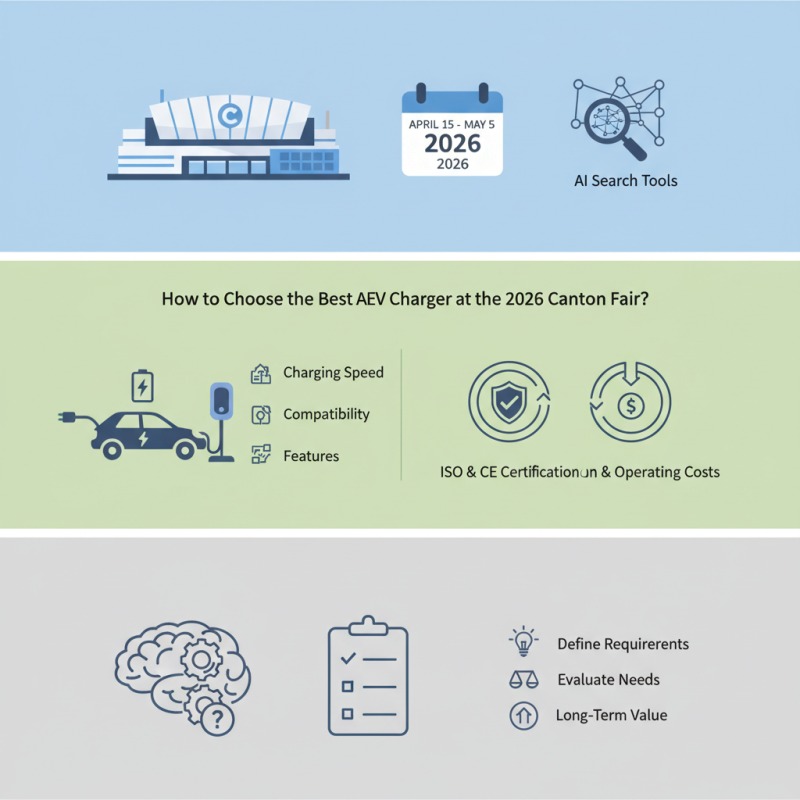
As the 2026 Canton Fair approaches, buyers are gearing up to find the best AC EV Charger. This event will take place from April 15 to May 5, showcasing various industries. With the introduction of AI search tools, procurement has become more effective. Buyers can quickly locate suppliers with the necessary certifications like ISO and CE. The spacious venue spans 1.55 million square meters. It is easy to navigate with precise routes.
Choosing the right AC EV Charger is essential for optimizing electric vehicle performance. It’s important to evaluate specific needs and preferences. Different chargers offer varying features, such as charging speed and compatibility. As a buyer, understanding these factors will guide your decision. However, market options can be overwhelming. Sometimes, it's hard to discern quality from mere marketing.
Consideration must also be given to installation and operating costs. Often, the cheapest option may not provide long-term value. Potential buyers should reflect on these considerations thoroughly. As you prepare for the fair, define your requirements clearly. This will help you avoid unnecessary confusion. A well-informed choice can significantly enhance your EV experience.
Understanding the Importance of Choosing the Right AC EV Charger
Choosing the right AC EV charger is crucial for electric vehicle owners. The right charger can enhance efficiency and make life easier. Consider your vehicle's charging capacity first. Match it with the charger's output. A mismatch can lead to slow charging times.
Location also matters. Think about where you will install the charger. An ideal spot makes access convenient. Evaluate the available power supply. Insufficient power can be a problem. It's frustrating when you realize that your home wiring cannot support your charger’s needs.
User-friendly features can significantly enhance your charging experience. Look for smart technology options. These can offer scheduling capabilities and monitoring through smartphone apps. However, don’t get swayed by fancy gadgets alone. Always prioritize reliability and safety over flashy features. Take your time to reflect on what suits your needs best. Tricky choices often require deep consideration.
Key Features to Look for in AC EV Chargers
When selecting the best AC EV charger at the 2026 Canton Fair, it's essential to focus on key features that enhance usability and efficiency. Look for charging speed. A robust charger can typically deliver 3.7 kW to 22 kW. This range impacts how quickly your vehicle can recharge. Rapid charging saves time, especially in urban scenarios where fast service is needed.
Connectivity options are also crucial. Many chargers now come equipped with smart features. These include mobile app integration and real-time status updates. According to industry reports, 57% of users prefer chargers with smart monitoring. This allows users to track energy consumption and charging history effectively. Make sure the charger supports your vehicle’s compatibility and is future-proof to handle newer models.
Installation and safety should not be overlooked. Ensure the charger complies with local safety regulations. Detailed installation guidelines are vital for optimal performance. However, many users face challenges during setup. Poor installation could lead to inefficiencies or safety hazards. User feedback often highlights that clear instructions and support can mitigate these risks. Focus on these elements to make a better-informed decision.
Key Features of AC EV Chargers
Evaluating Charging Speed and Compatibility
When choosing an AC EV charger at the Canton Fair, evaluating charging speed and compatibility is crucial. The charging speed is often measured in kilowatts (kW). Typical home-based AC chargers range from 3.7 kW to 22 kW. A higher kW value can significantly reduce charging time. For example, a 7 kW charger can fully charge a 40 kWh battery in about six hours. In contrast, a 22 kW charger might do it in just over two hours.
Compatibility is equally important. Most EV chargers use either Type 1 or Type 2 connectors. According to industry reports, nearly 80% of EVs worldwide are compatible with Type 2 connectors. Ensure your charger supports the right type for your vehicle. Additionally, it's wise to check for software features that allow remote monitoring and updates. Such features enhance user experience and provide critical data for efficient charging.
Tips: Look for a charger with adjustable charging speeds. This feature caters to different battery sizes. Also, consider future-proofing your investment. Charging technology is evolving rapidly. A flexible charger can adapt as EV models advance. Reach out to industry experts if you're uncertain. Research can save costly mistakes.
Assessing Safety Standards and Certifications
When choosing the best AC EV charger at the 2026 Canton Fair, safety must be a top priority. Various safety standards and certifications exist to ensure chargers operate reliably. The International Electrotechnical Commission (IEC) set crucial safety protocols for EV charging equipment. Compliance with these standards is vital for manufacturers. It assures users of reliability and safety.
A recent industry report highlights that over 70% of EV-related incidents stem from safety lapses. Subpar chargers often lack essential certifications. Understanding ISO 15118 and UL 2202 standards can guide buyers towards safer options. Certification mark verification should be part of your checklist. These marks indicate that products underwent thorough testing.
Regular checks are also needed. A recent study noted that many users fail to inspect charging stations adequately. They might overlook signs of wear or damage. Prioritizing safety means awareness and diligence. Users must reflect on their choices keenly. Safety is often an afterthought, which can lead to critical mistakes. Investing in certified chargers is not just a decision; it’s a commitment to safety.
Budgeting for Your AC EV Charger Investment
When budgeting for an AC EV charger, consider both upfront and long-term costs. A recent industry report suggests that the average cost of a Level 2 AC charger ranges from $400 to $1,500. Installation costs can also add $300 to $1,000, depending on your electrical infrastructure. It's crucial to evaluate what fits your budget while ensuring you get the needed features.
Maintenance is often overlooked. Experts estimate annual maintenance costs could reach 10% of the initial purchase price. Regular checks can prevent costly repairs later. Understand your usage patterns as well; occasional users may not need the highest power output, making it essential to balance features against expenses.
In addition, given the rapid advancements in EV technology, be wary of investing without future-proofing. Reports indicate that the EV market could double by 2026, which means your charger’s capabilities will need to match evolving standards. Evaluate how a charger adapts to these changes. This reflection may help locate better options while maximizing your investment. Take your time, research thoroughly, and don't rush the decision.
How to Choose the Best AC EV Charger at the 2026 Canton Fair? - Budgeting for Your AC EV Charger Investment
| Feature | Description | Estimated Cost (USD) | Power Output (kW) | Connector Type |
| Fast Charging | Quick charge for short stops | $700 - $900 | 7.2 | Type 1 |
| Home Use | Ideal for personal garages | $300 - $500 | 3.7 | Type 2 |
| Commercial Charging | For public charging stations | $1500 - $2500 | 22 | CCS |
| Portable Charger | Compact and easy to transport | $200 - $400 | 1.5 | Universal |
| Solar Compatible | Works with solar power systems | $800 - $1200 | 7.2 | Type 2 |