
What Is the Best Type of Solar PV Panel?
Choosing a solar panel sounds simple. A long warranty and a high efficiency rating can look convincing on paper. Solar Pv Panels differ in output, temperature response, durability, and performance in partial shade. Monocrystalline panels typically produce strong output in limited roof space, though they may cost more. Polycrystalline options may lower upfront costs, but they are less common in newer installations. Thin-film panels are lightweight and adaptable, yet usually need more area for comparable output. These are tendencies, not guarantees.
A shaded chimney, dusty roof, or narrow sun-exposed section can quickly change which option makes sense. Local sunlight and roof orientation matter, as do inverter compatibility and installation quality. Ask for the panel datasheet, product and performance warranties, and an estimated annual energy yield. Compare quotes using the same assumptions, including system size and expected shading. A low price can look attractive. But it may not reveal how the system will perform after years of heat and weather. There is no universal winner. A qualified solar professional can assess your roof and help narrow the choices. Even careful estimates remain estimates; real output varies with weather, maintenance, and household use. That uncertainty deserves a place in the decision.
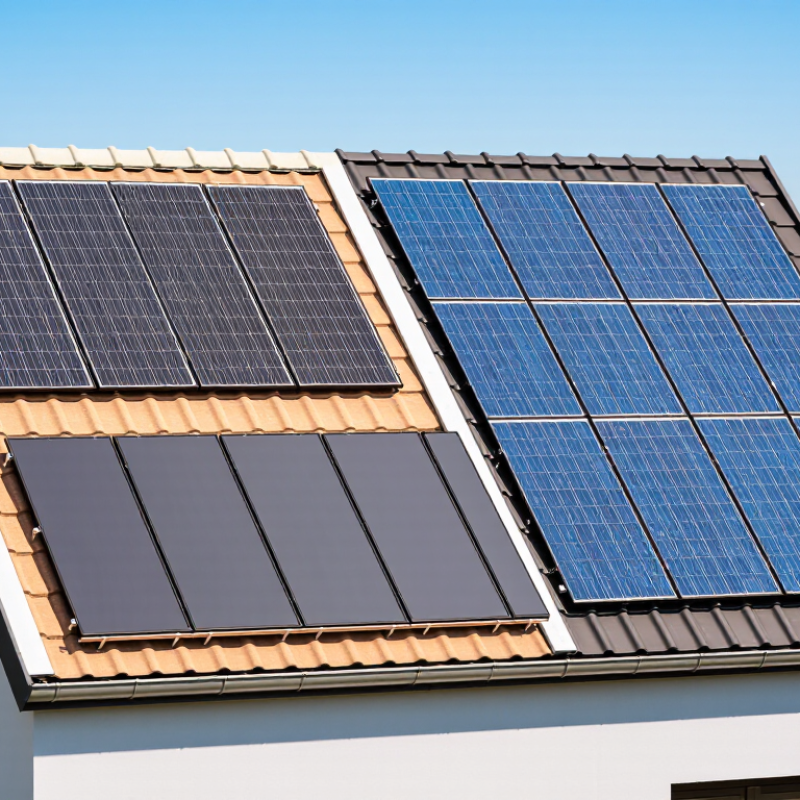
Compare Monocrystalline, Polycrystalline, and Thin-Film PV Technologies
The best solar PV panel depends on the roof, budget, and daily conditions—not just its rated output. Monocrystalline panels usually deliver more power per square metre, making them useful when roof space is tight. Their dark cells can look uniform, though appearance rarely predicts long-term performance. Space matters.
Polycrystalline panels typically have a speckled blue appearance and lower efficiency than many monocrystalline models. They may suit a larger roof where installation cost matters more than maximum output from each panel. Check the complete system quote, not panel prices alone. Wiring, mounting, and labour affect the final cost, too.
Thin-film panels are lighter and can be flexible, which helps on some curved or weight-sensitive surfaces. Their lower power density often means more area is needed for the same output. Performance in heat varies by thin-film chemistry, so compare temperature ratings and tested output rather than relying on a broad label. A narrow, shaded roof may favour one technology; an open workshop roof may favour another. The comparison is imperfect: real shade from a chimney, seasonal sun angles, and local installation quality can change results. I would want to inspect the roof and read each product’s datasheet before making a confident choice.
| Comparison Factor | Monocrystalline | Polycrystalline | Thin-Film |
|---|---|---|---|
| Typical module efficiency | About 20–23% | About 15–18% | About 10–19%, depending on the thin-film technology |
| Power output per unit of area | High; often a good fit when roof space is limited | Moderate; generally needs more area than monocrystalline modules for similar output | Low to high, depending on technology; many products need more area than crystalline modules |
| Temperature performance | Typical temperature coefficient: approximately −0.30% to −0.40% per °C | Typical temperature coefficient: approximately −0.35% to −0.45% per °C | Often approximately −0.20% to −0.30% per °C; varies by material and product |
| Performance in diffuse or low light | Produces power in diffuse light; performance depends on module design and conditions | Produces power in diffuse light; performance depends on module design and conditions | Some thin-film modules perform relatively well in diffuse light, but results vary by technology |
| Typical annual degradation | Often around 0.3–0.5% per year | Often around 0.4–0.6% per year | Varies by technology; commonly around 0.3–0.6% per year after any initial light-induced stabilization |
| Expected service life | Typically designed for 25 years or more | Typically designed for 25 years or more | Often designed for 20–25 years or more; product specifications vary |
| Relative upfront cost | Moderate to high; widely available in residential systems | Historically lower, but availability is now more limited in many markets | Can be competitive for large projects; balance-of-system and installation costs affect total cost |
| Typical installation settings | Homes, businesses, and utility-scale projects | Some existing or budget-focused installations; less common in new markets | Large-scale projects, lightweight applications, and some surfaces where flexibility or low weight is useful |
| Main advantages | High efficiency, compact area requirements, and broad market availability | Established crystalline-silicon technology and historically accessible pricing | Potentially lighter construction and favorable temperature behavior for some technologies |
| Main considerations | May cost more than some alternatives; output still falls as module temperature rises | Usually lower efficiency than monocrystalline panels and requires more installation area | Efficiency, durability, and material characteristics vary substantially by technology; check product-specific specifications |
| Best suited for | Installations that prioritize high output from limited roof or ground area | Projects where suitable products are available and panel area is less constrained | Projects that benefit from a specific thin-film feature, such as low weight or large-scale deployment |
| Figures are typical market ranges, not guarantees. Actual efficiency, degradation, temperature response, service life, and cost depend on the specific module, installation, climate, and operating conditions. | |||
Related Posts
-

Navigating Global Standards for Power Solar Panels in Export and Import Markets
-

Challenges Facing Solar Pv Panels in Modern Renewable Energy Markets
-

10 Best Energy Solar Panels for Efficient Energy Solutions?
-
What is the Best Energy Solar Panels for Global Buyers?
-
Why Choose Solar PV Panels for Your Energy Needs?
-
Top 10 Solar PV Panel Manufacturers from China Showcased at the 137th Canton Fair