What Is the Best Marine Trolling Motor Battery in 2026?
Choosing the best Marine Trolling Motor Battery in 2026 starts with your boat, motor, and typical time on the water. A battery that performs well on a calm afternoon may struggle during long runs, repeated high-speed use, or chilly mornings. Check the motor’s voltage requirements first. Then compare usable capacity, weight, charging needs, and warranty support. The label alone tells only part of the story.
Marine systems author Nigel Calder’s published guidance emphasizes treating batteries as part of a complete electrical system. A practical paraphrase of that principle is: “Choose the battery to suit the whole system, not just the motor.” That distinction matters. A lithium battery may offer lower weight and greater usable capacity, while a well-matched AGM battery can suit owners who value familiar charging and handling. Neither chemistry is automatically best for every boat.
This guide compares battery types, real-world runtime, installation considerations, and ownership costs. It also explains how to estimate capacity from motor draw and hours on the water. Small details count: cable length, connector condition, and a charger matched to the battery can affect performance. No estimate is perfect. Wind, weeds, current, and an aging motor can change runtime more than a neat chart suggests. Use the recommendations as a starting point, then check them against your own setup and manufacturer instructions.
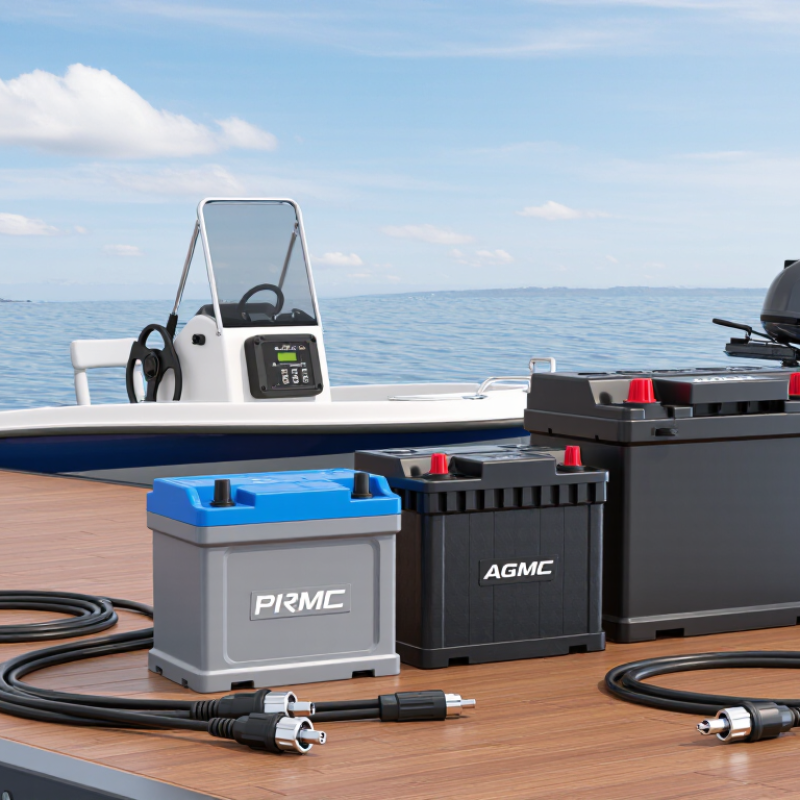
How Marine Trolling Motor Batteries Power a Boat
A trolling motor battery supplies direct-current power to the motor, while the motor’s controls regulate how much current it draws. More thrust usually means faster discharge. Capacity, commonly listed in amp-hours, offers a useful starting point: a 100-Ah battery supplying a steady 20 amps gives five theoretical hours. Real runtime is usually shorter. Wind, weeds, boat load, temperature, battery age, and discharge limits all affect usable energy. A tidy estimate can mislead.
The battery also needs to match the motor’s required voltage and the boat’s wiring and protection. Secure connections matter; a loose terminal can interrupt power when the boat rocks. Check the battery’s discharge guidance, and allow for enough reserve to return safely. Small details matter. The National Marine Manufacturers Association’s 2024 Recreational Boating Statistical Abstract reports that 85 million Americans went boating in 2023, underscoring how many outings depend on reliable onboard power. That figure does not measure trolling-motor use, though. For a practical setup, compare the motor’s expected current draw with the battery’s usable capacity, then check performance under your typical fishing conditions. A quick dockside test helps, but it cannot perfectly predict a windy day on the water.
How Marine Trolling Motor Batteries Power a Boat
Estimated usable energy from example 100 Ah battery banks in a 12 V trolling-motor system
Usable energy is estimated as nominal voltage × rated capacity × assumed usable discharge: 50% for lead-acid and 80% for lithium iron phosphate (LiFePO₄). At a constant 300 W load, these figures represent about 2.0 and 3.4 hours, respectively. Actual runtime varies with motor speed, battery condition, temperature, and other operating factors.
Battery Types and Their Key Differences
For a trolling motor, battery chemistry affects weight, usable capacity, charging, and upkeep—not just price. Flooded lead-acid batteries are familiar and affordable, but require upright installation, ventilation, and periodic water checks. AGM batteries seal the electrolyte and resist vibration, with less routine maintenance. They are still heavy. Both lead types can lose service life when repeatedly discharged deeply.
LiFePO4 batteries generally provide more usable energy per pound and maintain steadier voltage as charge falls. They can tolerate deeper discharge, but need a compatible charger and battery-management protection. Cold matters. Check the motor’s voltage and current draw, plus the battery’s dimensions and cold-weather charging limits.
The U.S. Environmental Protection Agency reports that about 99% of lead-acid batteries are recycled in the United States. That is a useful recovery benchmark, though collection access varies.
Advertised capacity is not the same as usable capacity, and I would leave a runtime margin: wind and boat load can quickly change the estimate.
Specifications That Determine Battery Performance
A trolling motor battery’s headline capacity is only a starting point. Check voltage first, then compare amp-hours and usable energy. A 12-volt, 100-amp-hour battery does not always deliver 100 amp-hours in real conditions. Chemistry, discharge limits, temperature, and battery age all affect what reaches the motor.
Look at the continuous discharge rating, not just the brief peak rating. The battery management system must support the motor’s sustained current draw without cutting power. Runtime also changes with speed, wind, weeds, and boat load. A calm-water estimate can disappoint on a windy afternoon. For planning, compare watt-hours and leave a reserve rather than assuming every rated amp-hour is available.
Charging and fit matter, too. Confirm the charger matches the battery chemistry and voltage, and check any cold-temperature charging limits. Measure the compartment, including space for cables and ventilation where required. Weight affects handling and boat balance; terminal layout can make installation awkward. Small details. Real consequences. I would still treat advertised runtime as an estimate, not a promise, because a neat specification sheet cannot predict every day on the water.
What Is the Best Marine Trolling Motor Battery in 2026? — Specifications That Determine Battery Performance | Battery type | Nominal voltage | Usable capacity from a 100 Ah battery | Typical cycle life* | Approx. weight at 100 Ah | Charging and maintenance | Best suited to |
| Lithium iron phosphate (LiFePO₄) | 12.8 V | About 80–100 Ah, subject to the battery’s rated limits and installation | About 2,000–5,000 cycles; varies with depth of discharge, temperature, and charge settings | About 24–31 lb (11–14 kg) | Use a compatible charger. Many batteries require charging above freezing unless they have approved low-temperature charging protection. Generally maintenance-free. | Frequent use, lower carried weight, and longer runtime from a given rated capacity |
| Absorbent glass mat (AGM) lead-acid | 12 V | About 50 Ah for a longer service life; deeper discharge is possible but may shorten life | About 300–700 cycles under typical deep-cycle conditions | About 60–70 lb (27–32 kg) | Use a charger with an AGM-compatible profile. Sealed and typically maintenance-free, but still heavy and sensitive to repeated deep discharge. | Users who prefer sealed lead-acid and have a compatible charging system |
| Flooded deep-cycle lead-acid | 12 V | About 50 Ah for a longer service life; regularly using more can reduce cycle life | About 200–500 cycles under typical deep-cycle conditions | About 55–65 lb (25–29 kg) | Requires a suitable lead-acid charging profile and periodic electrolyte-level checks. Must be installed upright and ventilated. | Budget-conscious installations with space for routine inspection and ventilation |
| Gel lead-acid | 12 V | About 50 Ah for a longer service life; follow the battery maker’s discharge limits | About 300–700 cycles under typical deep-cycle conditions | About 60–70 lb (27–32 kg) | Requires a gel-compatible charging profile; excessive charging voltage can damage the battery. Sealed and typically maintenance-free. | Installations needing a sealed lead-acid battery and using a correctly matched charger |
| How to compare: For a trolling motor, prioritize usable amp-hours, weight, cycle life, voltage compatibility, and charger compatibility. These figures are representative ranges, not guarantees; actual performance depends on battery design, temperature, discharge rate, maintenance, and charging practices. Confirm the motor’s voltage requirements and the battery maker’s specifications before choosing a battery. |
| *Cycle life: A cycle is a discharge followed by a recharge. Published cycle-life figures are measured under specified test conditions, so figures from different batteries may not be directly comparable. |
How to Match a Battery to Your Trolling Motor
Start with the motor’s required voltage, not its thrust rating. A 55-pound-thrust motor may use 12 volts, while larger models often need 24 or 36 volts; check the manual. The battery bank must match that voltage. Then estimate capacity in amp-hours using your typical hours on the water and the motor’s current draw. For example, a motor averaging 20 amps for three hours uses about 60 amp-hours before you allow for reserve. Real use varies. Wind, weeds, and repeated high-speed runs can drain a battery faster than calm-water estimates suggest.
Tips: Leave some capacity unused. Check that the battery’s continuous discharge rating meets the motor’s maximum current, and confirm your charger supports the battery’s chemistry and voltage. Keep terminals dry and secure; a loose connection can look like a weak battery.
Battery chemistry affects weight, usable capacity, charging needs, and cost. Compare specifications, not just advertised amp-hours, since ratings may assume gentle discharge conditions. It is easy to over-trust the math. Track runtime across several trips, then adjust your capacity estimate for demanding conditions.