
What Are the 7 Best Permanent Hair Removal Machines?
Choosing among the 7 best Permanent Hair Removal machines takes more than comparing prices or power settings. The right choice depends on treatment area, hair color, skin tone, and how consistently a device can be used. Results also vary. No device should be presented as a guaranteed way to remove every hair forever.
The American Society of Plastic Surgeons’ 2023 procedural statistics reported more than one million laser hair removal treatments in the United States. That figure signals strong demand, but it does not prove that every machine works equally well. In its patient guidance, Cleveland Clinic dermatologist Dr. Shilpi Khetarpal describes laser hair removal as “a medical procedure that uses a concentrated beam of light (laser) to remove unwanted hair.” Her wording is a useful reminder: treatment involves focused energy, not a simple grooming shortcut.
Details matter. A small handheld device may suit an upper lip, while treating both legs takes patience and careful coverage. Some home devices use intense pulsed light rather than a clinic laser, so their specifications and intended users differ. The U.S. Food and Drug Administration also distinguishes permanent hair reduction from total, permanent removal. That distinction is easy to miss. This guide compares seven options by technology, safety features, usability, and evidence—not marketing claims alone. Even then, choosing well can feel less certain than product pages suggest.
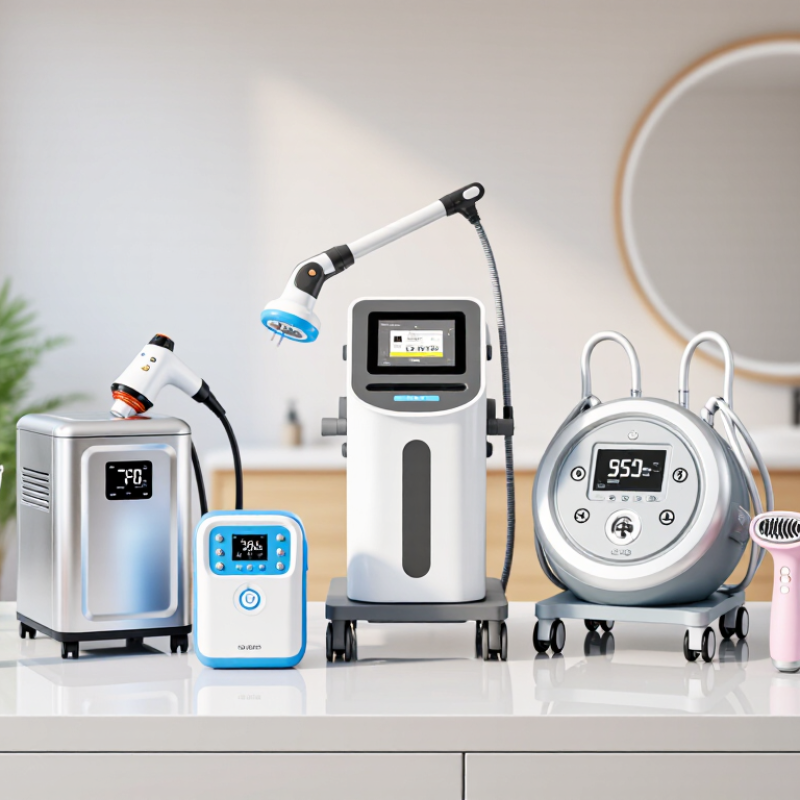
How Permanent Hair Removal Machines Work
Permanent hair removal machines use light energy to reduce future hair growth. Laser devices send a focused wavelength into the skin, while intense pulsed light systems use broader flashes. The pigment in a hair absorbs this energy and converts it to heat. That heat can affect the follicle, which produces the hair.
The process works best when a hair is actively growing, because it is then connected to its follicle. Not every hair is in this phase at once. That is why several sessions, spaced over time, are usually needed. Results vary with hair color, skin tone, device settings, and treatment area. Pale, gray, or red hair may respond less reliably. “Permanent” can be an overstatement: many people experience long-term reduction, but some regrowth can occur.
Safety matters. A trained provider can assess skin and hair characteristics and choose suitable settings. At home, follow the device instructions, protect your eyes, and test a small patch first. Avoid treating irritated or recently tanned skin unless a qualified professional advises otherwise. It may feel warm, like a quick rubber-band snap. Results can be uneven. Even careful routines do not guarantee smooth skin forever, and that distinction deserves attention before starting treatment.
| Machine Type | How It Works | Often Best Suited For | Expected Outcome | Key Considerations |
|---|---|---|---|---|
| Professional alexandrite laser | Uses a 755 nm laser wavelength. Melanin in the hair absorbs the light, which heats and damages the follicle. | People with darker hair and lighter skin, following a professional skin assessment. | Can provide long-term hair reduction after a course of treatments; some regrowth or maintenance may occur. | Because melanin in the skin also absorbs this wavelength, treatment settings and skin type require careful assessment. |
| Professional diode laser | Uses a focused laser beam, commonly around 800–810 nm, to heat pigment in the hair follicle. | A range of skin types and hair colors, depending on the device, settings, and practitioner’s assessment. | Typically intended for long-term hair reduction rather than guaranteed removal of every hair. | Results depend on hair pigment, treatment coverage, settings, and completion of multiple sessions. |
| Professional Nd:YAG laser | Uses a 1064 nm laser wavelength, which penetrates more deeply and is less absorbed by epidermal melanin than shorter laser wavelengths. | Often considered for darker skin tones when operated by a suitably trained professional. | Can reduce hair growth over time; individual response varies. | It may be less effective on fine or light-colored hair. A qualified provider should assess suitability and risks. |
| Professional intense pulsed light (IPL) system | Uses filtered pulses of broad-spectrum light—not a laser—to heat melanin in the hair and damage the follicle. | People whose hair and skin contrast is suitable for the particular device and its filters. | Can produce long-term hair reduction after repeated treatments. | IPL performance and safe settings vary by device. It is generally less suitable for very light hair and may be unsafe for some skin tones. |
| At-home IPL device | Delivers lower-energy, broad-spectrum light pulses intended to reduce hair growth gradually. | Users whose skin tone and hair color fall within the device’s stated eligibility range. | May reduce regrowth with consistent use and periodic maintenance; it should not be treated as guaranteed permanent removal. | Follow the device instructions, patch-test as directed, and avoid use on areas or skin tones the instructions exclude. |
| Electrolysis machine using thermolysis | Delivers high-frequency electrical current through a fine probe inserted into an individual hair follicle, generating heat that damages its growth tissue. | People seeking treatment of individual hairs, including hairs with little or no pigment. | Electrolysis is recognized by the U.S. FDA as a method of permanent hair removal; multiple treatments are usually needed. | Each follicle is treated individually, so large areas can require substantial time. Practitioner skill and hygiene matter. |
| Electrolysis machine using the blend method | Combines thermolysis heat with galvanic current, which creates a chemical reaction in the follicle. | People seeking follicle-by-follicle treatment; suitability depends on the practitioner’s assessment. | Can permanently remove treated hairs when follicles are adequately treated, but treatment is gradual and may require repeat sessions. | As with other electrolysis methods, treatment is individual and results depend on technique, hair-growth cycles, and follow-up. |
| Important: “Permanent hair removal” and “permanent hair reduction” are not interchangeable. Electrolysis is recognized by the U.S. FDA as permanent hair removal, while laser and IPL treatments are generally described as permanent or long-term hair reduction. Suitability, risks, and results vary; consult a qualified professional, especially if you have a skin condition, take photosensitizing medication, or are unsure which method is appropriate. | ||||